II · THE DISCOVERY · HISTORY OF SCIENCE
Carbon
The element was ancient; the understanding that it was an element came late. Lavoisier gave carbon its place in chemistry's new language in 1789.
At a glance
- Recognised
- 1789
- Credited to
- Antoine Lavoisier
- Named after
- Coal (Latin carbo)
- Symbol
- C
- Atomic number
- 6
Look closer
Tetravalent means four bonds
Carbon is tetravalent — its atoms can form up to four covalent bonds with other atoms. A covalent bond is a link made by sharing electrons, and carbon has four electrons in its outer shell available for this. That four-way capacity is what lets carbon build the long chains and branching structures that make organic chemistry possible. Most elements bond in simpler patterns; carbon's geometry is more flexible.
Three forms, wildly different properties
Carbon appears in nature as graphite, diamond, and amorphous carbon — three allotropes, meaning three arrangements of the same element. Graphite is soft, opaque, black, and conducts electricity. Diamond is transparent, the hardest naturally occurring material, and does not conduct. Amorphous carbon is the soot and char left when organic matter burns incompletely. Same atoms, different structures, entirely different behaviour.
The name points to coal, not the other way round
Lavoisier named the element carbon after the Latin word for coal, carbo. Coal had been known and burned for centuries, but the idea that it was made mostly of a single element — and that the same element appeared in diamond, in soot, in limestone, and in every living thing — was new in the late eighteenth century. The name records what was most familiar, not what mattered most.
The story
Carbon is a chemical element with the symbol C and atomic number 6 — meaning each atom has six protons in its nucleus. It is nonmetallic and tetravalent, a term meaning its atoms can form up to four covalent bonds because the outer shell of a carbon atom holds four electrons available for sharing. That capacity to bond four ways is central to carbon's behaviour in chemistry.
Antoine Lavoisier is credited with the formal recognition of carbon as an element in 1789. The material itself — coal, charcoal, soot, diamond — had been known since antiquity, but the understanding that these substances were forms of a single chemical element, distinct and not further divisible by ordinary means, came much later. Lavoisier was working in the decades when chemistry was being rebuilt around the concept of elements as fundamental substances, and he named this one after coal, from the Latin carbo.
Carbon makes up about 0.025 percent of the Earth's crust, a modest share by mass. In the human body it is the second most abundant element by mass, at about 18.5 percent, after oxygen. Three isotopes occur naturally: carbon-12 and carbon-13 are stable, while carbon-14 is a radionuclide — a radioactive form — decaying with a half-life of about 5,700 years.
The atoms of carbon can bond together in different spatial arrangements, producing various allotropes. Well-known allotropes include graphite, diamond, amorphous carbon, and fullerenes — each with distinct physical properties. Graphite is opaque and black, soft enough to leave a mark on paper, which is why it is used in pencils and why its name comes from the Greek verb meaning "to write". Diamond is highly transparent and the hardest naturally occurring material known. Graphite conducts electricity; diamond does not. Under normal conditions diamond, carbon nanotubes, and graphene have very high thermal conductivities — meaning they carry heat exceptionally well. All carbon allotropes are solid under normal conditions, with graphite being the most thermodynamically stable form at standard temperature and pressure.
Carbon forms a vast number of compounds. About two hundred million carbon compounds have been described and indexed, and that number is still only a fraction of the compounds that are theoretically possible under standard conditions. The most common oxidation state of carbon in inorganic compounds — compounds not involving the complex structures of organic chemistry — is +4, while +2 is found in carbon monoxide and in certain metal complexes. The largest sources of inorganic carbon are limestones, dolomites, and carbon dioxide, but significant quantities occur in organic deposits such as coal, peat, oil, and methane clathrates.
Carbon is chemically resistant. It requires high temperature to react even with oxygen, which is why coal must be heated before it burns and why diamond does not combust in ordinary air.
Why it mattered then
Before 1789, carbon existed in practice but not in theory. People burned coal and charcoal, drew with graphite, valued diamonds, and understood that these materials had something in common — they all burned or could be made to burn, leaving little or no ash. But the idea that they were all forms of a single element, a substance that could not be broken down further by chemical means, belonged to the new chemistry Lavoisier and his contemporaries were building. Lavoisier's work was part of a larger effort to replace the older language of alchemy and phlogiston theory with a systematic vocabulary based on elements and compounds. Naming carbon as an element in 1789 meant placing it in that new framework, alongside oxygen, hydrogen, nitrogen, and the other substances recognised as fundamental. It did not change what coal or diamond could do, but it changed how chemists understood them and how they could reason about reactions involving carbon. The recognition that carbon was an element made it possible to write chemical equations, to predict products, and to see patterns across substances that had previously seemed unrelated.
Why it matters now
Carbon is the structural basis of all known life. Organic chemistry — the chemistry of carbon compounds — is a separate discipline because carbon's ability to form four bonds and build long chains and rings makes it suited to the complexity biology requires. Proteins, DNA, fats, and carbohydrates are all carbon-based. Carbon also matters in the Earth's climate. Carbon dioxide is a greenhouse gas, meaning it traps heat in the atmosphere, and the concentration of carbon dioxide has been rising since the industrial revolution as coal, oil, and natural gas — all carbon-rich fossil fuels — are burned. The carbon cycle, the movement of carbon between the atmosphere, oceans, soil, and living things, is central to climate science. Carbon's allotropes have practical uses that depend on their different structures. Graphite is used in pencils, lubricants, and electrodes. Diamond is used in cutting tools and jewellery. Newer forms of carbon, such as fullerenes, carbon nanotubes, and graphene, are being studied for applications in electronics, materials science, and medicine. Graphene, a single layer of carbon atoms arranged in a hexagonal lattice, conducts electricity and heat very well and is the subject of ongoing research into flexible electronics and high-strength composites.
The surprising detail
The same element that makes diamond the hardest naturally occurring material also makes graphite soft enough to write with. The difference is entirely in how the atoms are arranged. In diamond, each carbon atom is bonded to four others in a rigid three-dimensional lattice, which is what gives diamond its hardness. In graphite, the atoms are arranged in flat sheets, with each atom bonded to three others in the same plane, and the sheets are held together only by weak forces. The sheets slide over each other easily, which is why graphite feels slippery and why it leaves a mark on paper. Same atoms, same element, entirely different properties because of structure alone.
What is disputed
The discovery date of 1789 reflects when Lavoisier formally recognised carbon as an element in the new chemical nomenclature, not when carbon materials were first known or used. Carbon in the form of charcoal, soot, and coal had been known and used since antiquity, and the encyclopaedia source notes that carbon is "one of the few elements known since antiquity". The 1789 date marks a shift in understanding rather than a first encounter with the material.
Remember this
Carbon was known for millennia before it was understood as an element. Lavoisier gave it a name and a place in the new chemistry in 1789.
Test yourself
About two hundred million carbon compounds have been described and indexed. What property of carbon atoms makes this diversity possible?
Carbon is tetravalent, meaning each atom can form up to four covalent bonds with other atoms. That four-way bonding capacity allows carbon to build long chains, branching structures, and rings, which is the foundation of organic chemistry. Most elements bond in simpler, more limited patterns; carbon's ability to bond four ways, and to bond with other carbon atoms as well as with hydrogen, oxygen, nitrogen, and other elements, is what makes the vast diversity of carbon compounds possible.
Go deeper
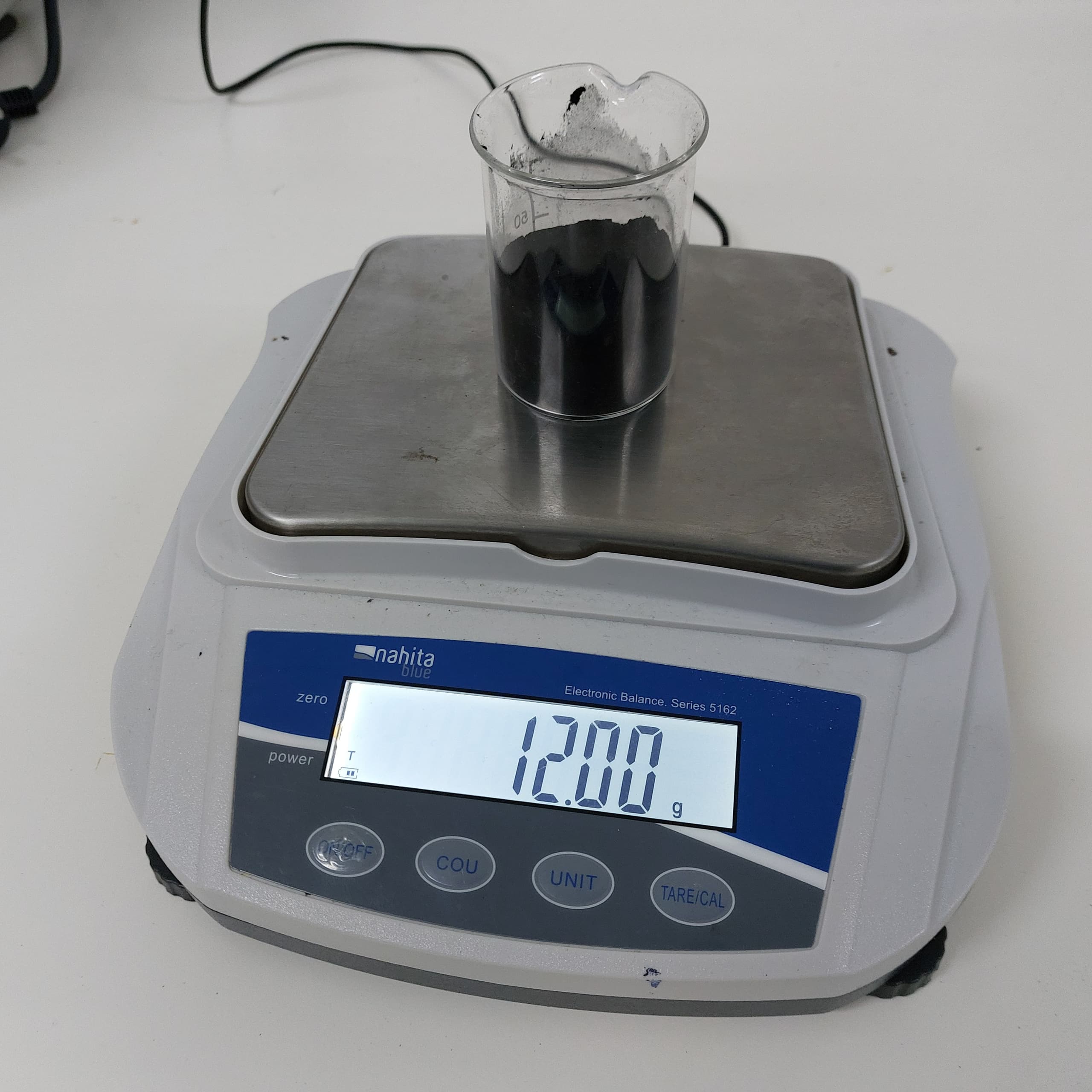
Image: Julen Artano, CC BY-SA 4.0. Licence: CC BY-SA 4.0. Source.