II · THE DISCOVERY · HISTORY OF SCIENCE
Radio
Radio is both a natural phenomenon — electromagnetic waves at certain frequencies — and a technology for putting those waves to work carrying information through space without a cable.
At a glance
- Discovered
- 1894
- What it is
- Technology of communicating using radio waves
- Radio waves
- Electromagnetic waves of frequency between 3 hertz and 300 gigahertz
- Classification
- Industry; technology
Look closer
The frequency range defines it
Radio waves are electromagnetic waves — the same category of phenomenon as visible light and X-rays — distinguished by their frequency. The definition sets the lower boundary at 3 hertz, meaning three complete wave cycles per second, and the upper boundary at 300 gigahertz, or three hundred billion cycles per second. Below that range are waves too slow to be called radio; above it, the spectrum moves into infrared. The frequency determines how the waves behave: how far they travel, how they reflect off surfaces, how much information they can carry.
Transmitter, wave, receiver
The fundamental principle is this: an electronic device called a transmitter, connected to an antenna, generates the waves and radiates them into space. Another antenna, connected to a receiver, picks them up. What travels between them is the wave itself, not a current through a wire. To carry information rather than just a signal, the transmitter modulates the wave — it varies some aspect of it, such as its amplitude or frequency — and the receiver decodes that variation back into sound, data, or an image.
Hertz proved they existed; Marconi sent them
Heinrich Hertz, a German physicist, proved the existence of radio waves on 11 November 1886. In the mid-1890s, Guglielmo Marconi, an Italian physicist, built on techniques physicists were using to study electromagnetic waves and developed apparatus for long-distance radio communication. He sent a wireless Morse Code message to a recipient over a kilometre away in 1895, and a transatlantic signal on 12 December 1901. The discovery date recorded is 1894, which falls between Hertz's proof and Marconi's apparatus.
The story
Radio is the technology of communicating using radio waves. Radio waves are electromagnetic waves — the same phenomenon as visible light, but at a different frequency. The definition of radio waves sets the range between 3 hertz and 300 gigahertz. A hertz is one wave cycle per second, so 3 hertz means three complete cycles per second, and 300 gigahertz means three hundred billion. That range is wide enough to include waves that behave very differently from one another, but all of them can be generated, transmitted, and received using the same fundamental principle.
That principle is this: an electronic device called a transmitter, connected to an antenna, generates the waves and radiates them into space. The waves travel outward at the speed of light. Another antenna, connected to a receiver, picks them up. What moves between the two is the wave itself, not a current through a wire. That is what makes radio different from telegraphy or telephony over a cable: the signal crosses empty space.
To carry information rather than just a pulse, the transmitter modulates the wave. Modulation means varying some aspect of the wave — its amplitude, its frequency, or its phase — in a pattern that encodes sound, data, or an image. The receiver decodes that variation back into the original information. This is the mechanism behind radio and television broadcasting, mobile phones, wireless networking, and satellite communication.
Radio waves are also used for purposes other than communication. In radar, a transmitter sends out a beam of radio waves that reflects off an object — an aircraft, a ship, a missile — and the reflected waves return to a receiver, typically located with the transmitter. By measuring the time the waves take to return, the system calculates the object's distance and location. In radio navigation systems, a receiver picks up signals from multiple beacons whose positions are known, and by measuring the arrival time of the waves, it calculates its own position on Earth. In remote control devices, radio signals transmitted from a controller direct the actions of a remote device, such as a drone or a garage door opener.
The existence of radio waves was proved by Heinrich Hertz, a German physicist, on 11 November 1886. In the mid-1890s, Guglielmo Marconi, an Italian physicist, built on techniques physicists were using to study electromagnetic waves and developed apparatus for long-distance radio communication. He sent a wireless Morse Code message to a recipient over a kilometre away in 1895, and sent a transatlantic signal on 12 December 1901. The discovery date recorded for radio as a technology is 1894, which falls between Hertz's proof of the waves and Marconi's development of practical apparatus.
The emission of radio waves is regulated by law. Frequency bands within the radio spectrum are allocated for different uses, coordinated by the International Telecommunication Union.
Why it mattered then
Before radio, communication over distance required a physical connection: a wire for the telegraph, a cable for the telephone. Radio made it possible to send information across space without that connection, which meant ships at sea could communicate with shore, and signals could reach places where laying cable was impractical or impossible. The transatlantic signal Marconi sent in 1901 demonstrated that radio waves could cross an ocean, which had not been certain — the curvature of the Earth and the behaviour of the waves in the atmosphere were not fully understood. Commercial radio broadcasting began on 2 November 1920, when Westinghouse Electric and Manufacturing Company in Pittsburgh transmitted the live returns of the United States presidential election under the call sign KDKA. That broadcast showed that radio could reach not just a single recipient but an audience, and it opened the medium to uses beyond point-to-point communication.
Why it matters now
Radio waves carry the signals for mobile phones, wireless internet, satellite communication, and GPS navigation. Radar systems that rely on radio waves are used to track aircraft, guide ships, and study weather. Remote control devices, from car keys to drones, transmit commands using radio. Broadcasting over radio waves continues, though it now shares the spectrum with data transmission. The frequency bands within the radio spectrum are a regulated resource, allocated by international agreement to prevent interference between different uses. The technology rests on the same principle Marconi's apparatus demonstrated: a transmitter generates the waves, the waves travel through space, and a receiver picks them up.
The surprising detail
The transatlantic signal Marconi sent in 1901 was not expected to work by everyone who understood the physics. Radio waves travel in straight lines, and the Earth is curved, so a signal sent from one side of the Atlantic should have shot off into space rather than reaching the other side. That it did reach suggests the waves were reflected or refracted by something in the atmosphere, which was not understood at the time. The explanation came later: a layer of charged particles in the upper atmosphere, now called the ionosphere, reflects certain radio frequencies back toward the Earth's surface, allowing them to follow the curvature. Marconi's signal worked because the waves bounced.
What is disputed
The discovery date is recorded as 1894, which falls between Heinrich Hertz's proof of radio waves in 1886 and Guglielmo Marconi's development of long-distance radio apparatus in the mid-1890s. The date likely reflects the period when radio as a technology — rather than just a demonstrated physical phenomenon — began to take shape, but the record does not specify what event in 1894 the date marks.
Remember this
Radio is the technology of sending information across space using electromagnetic waves between 3 hertz and 300 gigahertz, without a wire connecting transmitter and receiver.
Test yourself
Radio waves and visible light are both electromagnetic waves. What makes a wave a radio wave rather than light?
The frequency. Electromagnetic waves are defined by how many cycles they complete per second, measured in hertz. Radio waves are those with frequencies between 3 hertz and 300 gigahertz. Visible light has a much higher frequency, in the hundreds of terahertz. The frequency determines how the waves behave — how far they travel, how they interact with materials, how much information they can carry — which is why the spectrum is divided into bands and each band is used for different purposes.
Go deeper
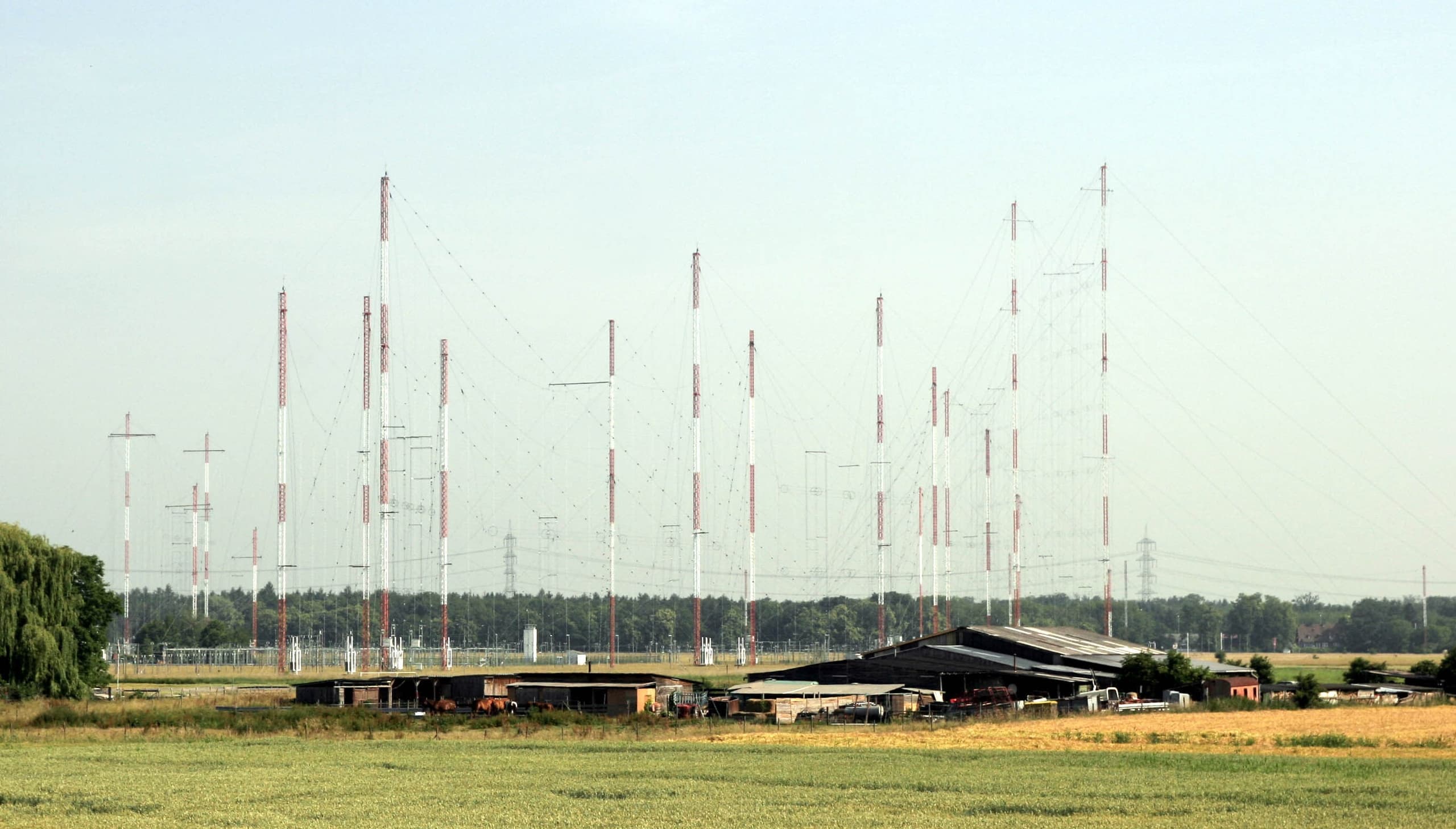
Image: I, Kuebi. Licence: CC BY-SA 3.0. Source.