II · THE DISCOVERY · HISTORY OF SCIENCE
Aluminium
A metal lighter than iron, abundant in rock but absent in its pure form — aluminium had to be discovered before it could be extracted.
At a glance
- Discovered
- 1825
- Credited to
- Hans Christian Ørsted and Humphry Davy
- Named after
- Alum, a compound containing aluminium
- Source material
- Bauxite, a sedimentary rock
- Density
- About one-third that of steel
Look closer
The credit is contested
The discovery is credited to both Hans Christian Ørsted and Humphry Davy, and the record marks this as contested. Two people working independently on the same problem in the same decade is common enough in science; what matters here is that neither claim displaces the other in the historical record.
It forms a protective skin
Aluminium has a great affinity for oxygen. When exposed to air, it forms a thin layer of oxide on its surface. That layer protects the metal beneath from further corrosion, which is why aluminium objects do not rust through the way iron does. The oxide is transparent, so the metal keeps its silvery appearance.
Named after a compound, not the other way round
Aluminium takes its name from alum, a compound that had been known for centuries before the element itself was isolated. Alum contains aluminium, but the pure metal had never been seen. The naming went backwards: the element was named after the compound it turned out to be part of.
The story
Aluminium is a chemical element with the symbol Al and atomic number 13. It has a density lower than other common metals — about one-third that of steel. It visually resembles silver in colour and reflects light well. It is soft, nonmagnetic, and ductile, meaning it can be drawn into wire or hammered into shape without breaking.
The element is a lithophile, meaning it binds readily to oxygen and is found in rocks rather than free in the Earth. It is the third most abundant element in the crust, after oxygen and silicon, but it virtually never occurs as the free metal. That abundance combined with that absence is the central fact: aluminium was everywhere and nowhere at once until someone worked out how to extract it.
The discovery was announced in 1825. The credit is given to both Hans Christian Ørsted, a Danish physicist, and Humphry Davy, and the record marks this as contested. What that means in practice is that two people working in the same period are both named in the historical account, and neither claim is treated as settled.
Aluminium is obtained industrially by mining bauxite, a sedimentary rock rich in aluminium minerals. The metal forms compounds primarily in the +3 oxidation state — meaning each aluminium atom loses three electrons when it bonds. The aluminium cation, written Al³⁺, is small and highly charged, so it pulls strongly on the electrons of other atoms. That gives aluminium's bonds a more covalent character, meaning the electrons are shared rather than simply transferred.
The strong affinity for oxygen means aluminium oxides are common in nature. When the metal is exposed to air, it forms a thin protective layer of oxide on the surface. That layer stops further corrosion, so aluminium does not rust through the way iron does. The oxide is transparent, so the metal retains its silvery look.
Chemically, aluminium is a post-transition metal in the boron group. It has one stable isotope, ²⁷Al, which is highly abundant. There is also a radioactive isotope, ²⁶Al, which decays slowly enough to be used in radiometric dating — measuring the age of rocks and meteorites by the ratio of isotopes they contain.
Despite its prevalence in the environment, no living thing is known to metabolise aluminium salts. The element is well tolerated by plants and animals, but it appears to play no biological role. Studies are ongoing into whether the sheer abundance of these salts might mean they have some function not yet identified.
Why it mattered then
Before 1825, aluminium did not exist as a substance anyone could hold. The compounds were known — alum had been used for centuries — but the pure metal had never been isolated. The discovery mattered because it added a new element to the known list, and because it opened the question of how to produce it in quantity. The answer to that second question took decades. The announcement of the discovery in 1825 was not the same as having a process that could make the metal cheaply. Industrial production began in 1856, and even then aluminium remained expensive and difficult to produce. It was not until 1886, with the Hall–Héroult process, that mass production became possible. That process brought the price down sharply and made aluminium available for everyday use rather than as a curiosity or a precious material.
Why it matters now
Aluminium became the most produced non-ferrous metal — meaning metal other than iron — in 1954, surpassing copper. In the twenty-first century, most aluminium is consumed in transportation, engineering, construction, and packaging in the United States, Western Europe, and Japan. The low density is responsible for many of those uses. An aluminium part weighs a third as much as the same part in steel, which matters in aircraft, cars, and anything else that has to be moved. The protective oxide layer means it does not corrode in the way iron does, which matters in construction and in anything left outdoors. The metal's ability to be drawn and shaped makes it suitable for packaging — foil, cans, and containers. The element's abundance in the crust means the supply is effectively unlimited, though extracting it remains energy-intensive. What changed between 1825 and now is not the amount of aluminium in the ground, but the ability to turn rock into metal at a price that makes it worth doing.
The surprising detail
Aluminium is the third most common element in the Earth's crust, yet it was unknown as a pure substance until the nineteenth century. The reason is that it never occurs free in nature — it binds so strongly to oxygen that it is always found in compounds, usually oxides in rock. The discovery was not a matter of finding aluminium somewhere; it was a matter of working out how to separate it from the oxygen it was bound to. That separation turned out to be difficult enough that the metal remained rare and expensive for decades after it was first isolated.
What is disputed
The discovery is credited to both Hans Christian Ørsted and Humphry Davy, and the record marks this as contested. The lesson does not choose between them or describe the nature of the dispute, because the facts supplied do not describe it.
Remember this
Aluminium is abundant in rock but never free in nature. Discovering it meant learning how to extract it.
Test yourself
Aluminium is the third most abundant element in the Earth's crust, yet it was not discovered until 1825. What made it so difficult to find?
Aluminium never occurs as a free metal in nature. It has such a strong affinity for oxygen that it is always found in compounds, usually oxides in rock. The discovery was not a matter of spotting the metal somewhere; it was a matter of working out how to separate it chemically from the oxygen it was bound to. That separation required techniques that did not exist until the nineteenth century, which is why an abundant element remained unknown for so long.
Go deeper
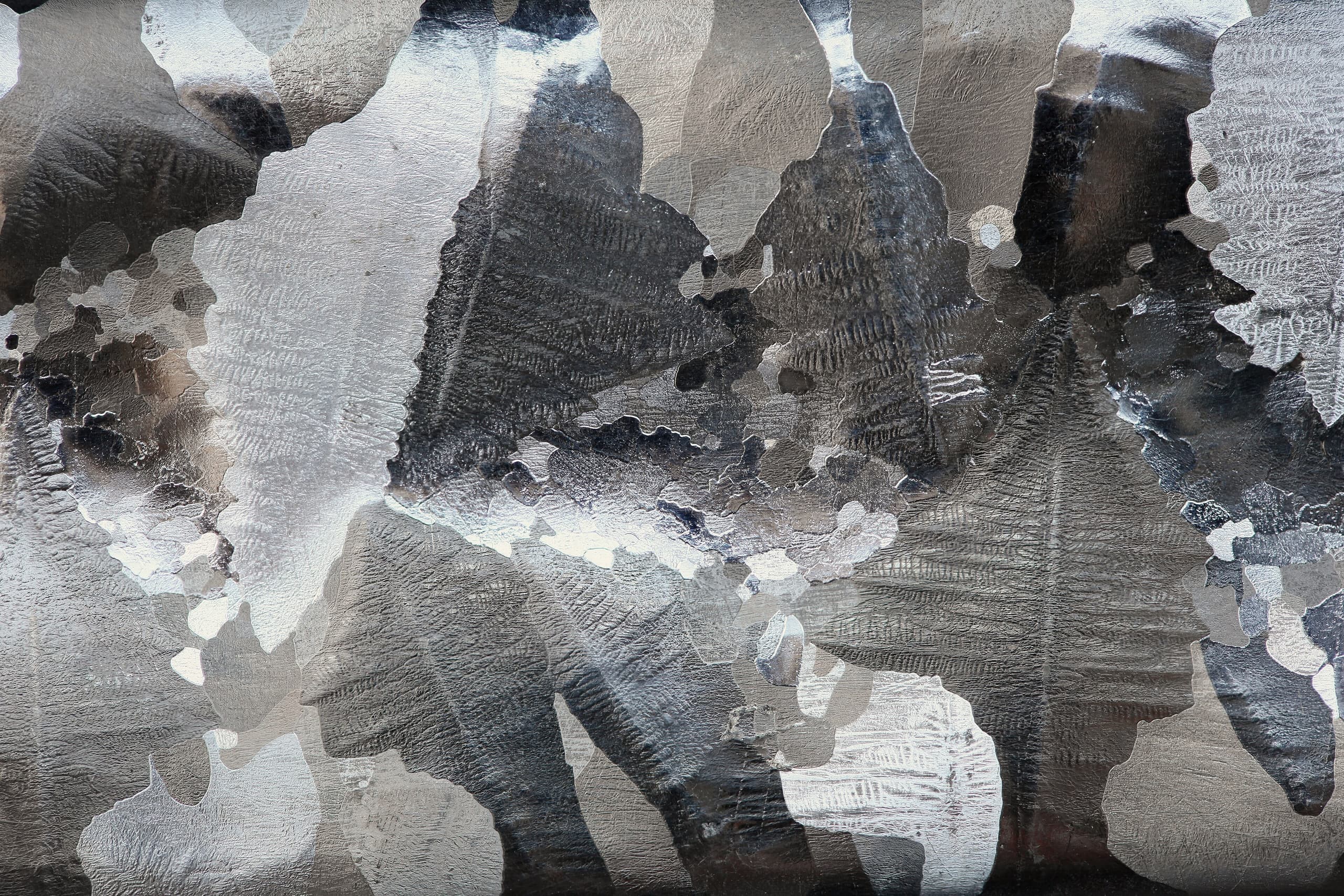
Image: Alchemist-hp ( talk ) ( www.pse-mendelejew.de ), FAL. Licence: FAL. Source.