II · THE DISCOVERY · HISTORY OF SCIENCE
Hydrogen
Hydrogen makes up three-quarters of ordinary matter in the universe, yet identifying it on Earth required someone to notice that a particular gas behaved differently from air.
At a glance
- What it is
- A chemical element with symbol H and atomic number 1
- Discovery date
- 1766
- Credited to
- Henry Cavendigh, Mikhail Lomonosov, Antoine Lavoisier (contested)
- Discovery locations
- Russian Empire, United Kingdom, France
- Named after
- Water — from the Ancient Greek for 'water-former'
Look closer
Three people, three countries
The discovery is credited to three men working in three different places: Henry Cavendish in the United Kingdom, Mikhail Lomonosov in the Russian Empire, and Antoine Lavoisier in France. The record marks this as contested, meaning there is no consensus on who should be named alone. What each contributed, or in what order, the available facts do not specify.
The gas had been made before
Hydrogen gas was produced artificially in the seventeenth century by reacting acids with metals. What changed in 1766 was not the production itself but the recognition that this gas was a distinct substance — something separate from air, with its own properties. Cavendish identified it as such and discovered that it produced water when burned.
Named for what it makes
The name hydrogen means 'water-former', from the Ancient Greek words for water and to bring forth. That name reflects the property Cavendish observed: when the gas burned, it produced water. The element was named for the compound it forms, not for any quality of the element itself.
The story
Hydrogen is the lightest chemical element and the most abundant in the universe, making up about seventy-five per cent of all ordinary matter. Under ordinary conditions on Earth, it exists as a colourless, odourless gas with the formula H₂ — two hydrogen atoms bonded together, called dihydrogen. It is highly combustible.
The discovery date given is 1766, and three men are credited: Henry Cavendish, Mikhail Lomonosov, and Antoine Lavoisier. The record marks this as contested, meaning scholars do not agree on a single discoverer. The locations named are the Russian Empire, the United Kingdom, and France, reflecting where each worked. What is certain is that hydrogen gas had been produced before the eighteenth century — by reacting acids with metals — but no one had understood it as a distinct substance. What changed in 1766 was recognition, not production.
Cavendish identified hydrogen gas as something separate from air and discovered that when it burned, it produced water. That observation is the origin of the element's name: hydrogen comes from Ancient Greek words meaning 'water-former'. The element was named for what it makes, not for what it is.
Hydrogen has one proton, one electron, and in its most common form, no neutrons. That makes it the simplest atom. It forms bonds readily with most nonmetallic elements, contributing to compounds including water and the organic substances that make up living things. In chemical reactions, particularly acid-base reactions, hydrogen plays a central role through the exchange of protons — the hydrogen nucleus — among molecules in solution.
In the universe at large, hydrogen exists mainly in stars, including the Sun, where it is in a plasma state — a hot, ionised gas. On Earth, it is found in water, in organic compounds, and as the gas H₂. In the early universe, neutral hydrogen atoms formed about three hundred and seventy thousand years after the Big Bang, when the expanding universe had cooled enough for electrons to remain bound to protons. After stars began to form, most hydrogen in the space between galaxies was re-ionised.
Understanding the colours of light that hydrogen absorbs and emits was crucial to the development of quantum mechanics in the twentieth century. The simplicity of the hydrogen atom — one proton, one electron — made it the test case for theories about how electrons behave around nuclei.
Why it mattered then
Before hydrogen was recognised as a distinct substance, the gas produced by reacting acids with metals was just another kind of air. What changed in 1766 was the understanding that this gas had its own properties and could be studied separately. Cavendish's observation that burning it produced water opened the question of what the elements themselves were, if hydrogen and oxygen together made water. That recognition mattered because it was part of a larger shift in chemistry during the eighteenth century, away from vague ideas about airs and principles and toward the identification of specific elements with specific properties. The name 'water-former' reflects that shift: it names the element for what it does in a reaction, not for some hidden essence.
Why it matters now
Nearly all hydrogen produced today comes from transforming fossil fuels, particularly through a process called steam reforming of natural gas. It can also be made from water by electrolysis — passing an electric current through it — but that process is more expensive. The main industrial uses are in processing fossil fuels and in making ammonia for fertiliser. Emerging uses include fuel cells, which generate electricity by combining hydrogen with oxygen, producing water. That makes hydrogen a candidate for storing energy and powering vehicles without releasing carbon dioxide at the point of use, though the overall climate effect depends on how the hydrogen itself is produced. Hydrogen's role in fundamental physics continues. The simplicity of the hydrogen atom — one proton, one electron — makes it the benchmark for testing theories about atomic structure and quantum mechanics. The colours of light it absorbs and emits are still used to probe the behaviour of matter under extreme conditions, including in distant stars.
The surprising detail
The element that makes up three-quarters of ordinary matter in the universe was produced artificially on Earth before anyone recognised it as a distinct substance. Hydrogen gas was being made in laboratories in the seventeenth century, but it took until 1766 for someone to understand that what they had was not just another kind of air but something with its own identity. The discovery was not in making the gas but in noticing it was different.
What is disputed
The discovery is credited to three people — Henry Cavendish, Mikhail Lomonosov, and Antoine Lavoisier — and marked as contested. The available facts do not specify what each contributed, in what sequence, or why the credit is disputed. The date given is 1766, but whether that applies to all three or to one of them is not stated. The locations named are the Russian Empire, the United Kingdom, and France, reflecting where each worked, but the record does not describe a priority dispute or explain the basis for the contested credit.
Remember this
Hydrogen was made before it was discovered. Recognition, not production, was the breakthrough.
Test yourself
Three men in three countries are credited with discovering hydrogen, and the record marks this as contested. What does that tell you about how scientific credit is assigned?
It tells you that identifying a discovery is not always straightforward, even when the date is recorded. The facts do not say what each person contributed or in what order, only that scholars have not agreed on a single discoverer. That disagreement is preserved in the record rather than resolved, which is the honest position when the evidence does not settle the question. Scientific credit often reflects what was published, what was recognised at the time, and what later historians have been able to verify, and those three things do not always point to the same person.
Go deeper
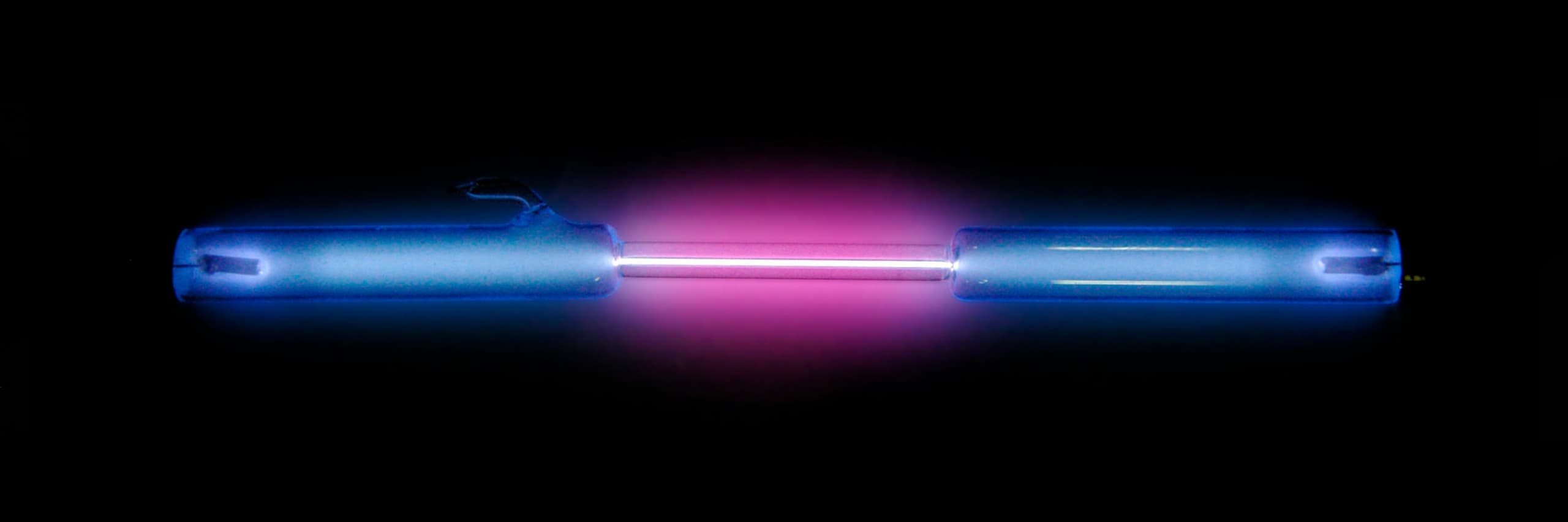
Image: Alchemist-hp ( talk ) ( www.pse-mendelejew.de ), FAL. Licence: FAL. Source.