I · THE OBJECT · BRITISH MUSEUM
Carthage Treasure
▶ Listen · narrated
What you bury says as much about fear as wealth. This hoard of Roman silver was hidden at Carthage, and nobody came back for it.
At a glance
- Type
- Hoard
- Material
- Silver tableware and jewellery
- Findspot
- Carthage, Tunisia
- Current location
- British Museum
Look closer
Tableware, not coinage
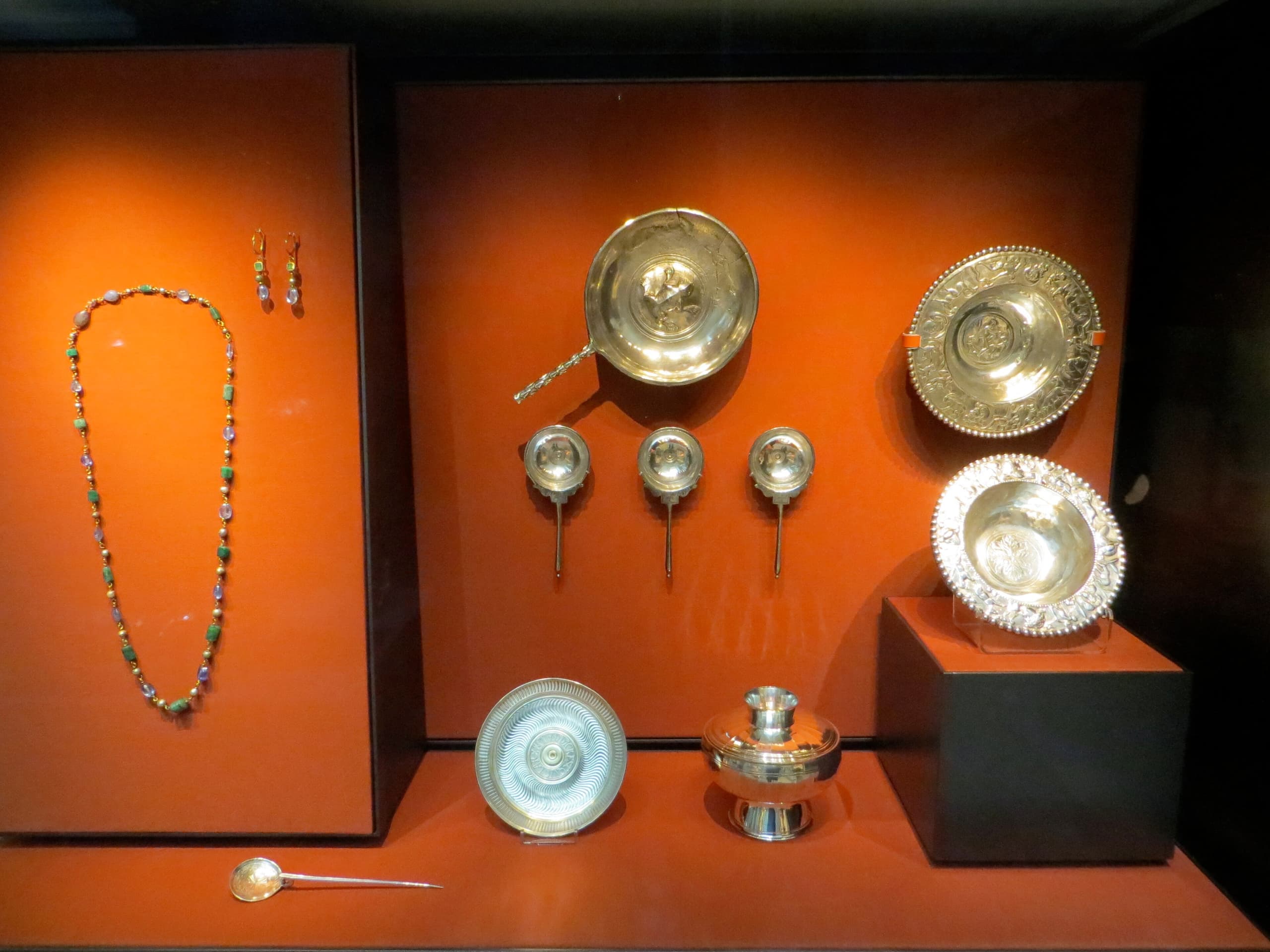
The hoard consists principally of worked silver objects — plates, vessels, jewellery — rather than bullion or coin. That matters because it tells you something about the person who buried it. Coinage is portable wealth in a standard form, easy to hide and easy to spend. Tableware is personal property, often decorated or inscribed, harder to conceal and harder to convert quickly. Whoever buried this chose to take elaborate domestic objects underground rather than melt them or leave them behind.
Found at Carthage, made under Rome
The objects are Roman in style and manufacture. Carthage was a major city under Roman rule, prosperous enough to support households with silver table services. The hoard reflects that wealth — domestic objects from a Roman household, buried at a site that had been under Roman administration for generations by the time these pieces were made.
Why it stayed buried
Hoards are usually buried with the intention of retrieval. Someone digs a hole, hides valuables, and plans to come back when the danger has passed. The fact that this silver stayed in the ground suggests the owner never returned — whether because they fled, died, were prevented from coming back, or forgot the location. The hoard is evidence of a crisis, but the nature of that crisis is not recorded.
The story
The Carthage Treasure is a hoard of Roman silver objects found at the site of ancient Carthage, near modern Tunis. The hoard consists mainly of tableware and jewellery, and most of it is now held at the British Museum.
A hoard is not the same as a collection. A collection is assembled; a hoard is hidden. The defining feature of a hoard is that it was buried with the intention of being dug up again, usually in a moment of crisis. Someone took valuable objects, put them in the ground, and planned to retrieve them when it was safe to do so. The fact that this silver remained buried tells you that retrieval never happened. Either the owner could not return, or they did not survive to try.
The objects themselves are domestic: plates, vessels, items of personal adornment. They are not coinage, which is easier to hide and easier to spend, but worked silver with decoration and, in some cases, inscriptions. That choice is revealing. Whoever buried this hoard took the time to gather household objects rather than converting them to bullion or leaving them behind. It suggests a household of some means, and a crisis that allowed enough time to bury property but not enough confidence to leave it above ground.
The circumstances of the burial are not recorded. Carthage, like other cities in the Roman empire, experienced periods of instability — invasions, civil wars, changes of regime. Any of these could have prompted a wealthy household to hide its silver. The hoard is evidence that something happened, but not evidence of what that something was.
The silver is Roman in style and manufacture, made for use in a Roman household. Carthage under Roman rule was a major city, and wealthy enough to support the kind of household that would own elaborate silver tableware. These objects were made to be used, and they were valuable enough to be worth hiding when danger came.
Why it mattered then
In the Roman world, silver tableware was a visible marker of status. It was not simply wealth in metal form; it was wealth on display. A household that could set a table with silver vessels was announcing its position in the social order, and that announcement was made every time guests were entertained. The objects in this hoard were functional — they were made to be used — but they were also symbolic. They said something about the people who owned them. Burying that silver was a calculated risk. Hoards are hidden when keeping them visible becomes more dangerous than losing them. The decision to bury rather than flee with portable wealth, or to melt it down and carry the bullion, suggests that the owner expected to return. The fact that they did not return suggests that expectation was wrong. The hoard is a snapshot of a miscalculation: someone thought the danger would pass, and it did not, or not in time.
Why it matters now
The Carthage Treasure matters now because it is evidence of a moment we cannot otherwise see. Written sources record the broad sweep of events — wars, successions, imperial policy — but they rarely record the decisions of individual households in the face of those events. A hoard tells you that someone, at a specific moment, felt unsafe enough to bury their property and hopeful enough to believe they would retrieve it. It is a record of fear and calculation, preserved by accident. It also raises questions about what we choose to save. The objects in this hoard are not the most portable or the most liquid forms of wealth. They are personal, decorated, inscribed. Whoever buried them chose to preserve these particular objects rather than converting them to something easier to hide or carry. That choice is worth thinking about. What you bury says something about what you value, and what you expect the future to look like.
The surprising detail
The hoard was found at Carthage, but the details of its discovery are not well recorded. Many hoards from the Roman period were found by accident — by farmers ploughing fields, by builders digging foundations, by people looking for something else entirely. The lack of a recorded excavation context means we do not know exactly where in the ancient city the silver was buried, or what else might have been nearby. That absence of context is frustrating, because it limits what can be said about the circumstances of burial. The objects themselves survive, but the story around them is incomplete.
What is disputed
The circumstances of the hoard's discovery are not well documented. The findspot is recorded as Carthage, but the exact location within the ancient city, the date of discovery, and the archaeological context are not reliably known. This limits what can be said about when the hoard was buried and why.
How it got here
The hoard was found in Tunisia and is now held at the British Museum. Tunisia, like other former colonies, has raised questions about the return of archaeological material removed during the colonial period. The circumstances under which this hoard left Tunisia and entered the British Museum's collection are part of ongoing discussions about the repatriation of cultural property from former colonial territories.
Remember this
A hoard is a crisis made visible: someone buried wealth they expected to retrieve, and never came back.
Test yourself
Why does the fact that this hoard consists of tableware rather than coinage matter for understanding who buried it?
Because tableware is harder to hide and harder to convert than coinage, which tells you something about the owner's priorities and expectations. Coins are portable, anonymous, and immediately spendable. Tableware is bulky, often inscribed or decorated, and needs to be melted down before it can be easily converted to other forms of wealth. The choice to bury worked silver objects rather than coin suggests the owner valued these particular items enough to take the extra trouble, and expected to be able to retrieve them and use them again. It is evidence of attachment to specific objects, not just to their metal value, and of a hope that normal life would resume.
Go deeper
Image: Jononmac46, CC BY-SA 3.0. Licence: CC BY-SA 3.0. Source.