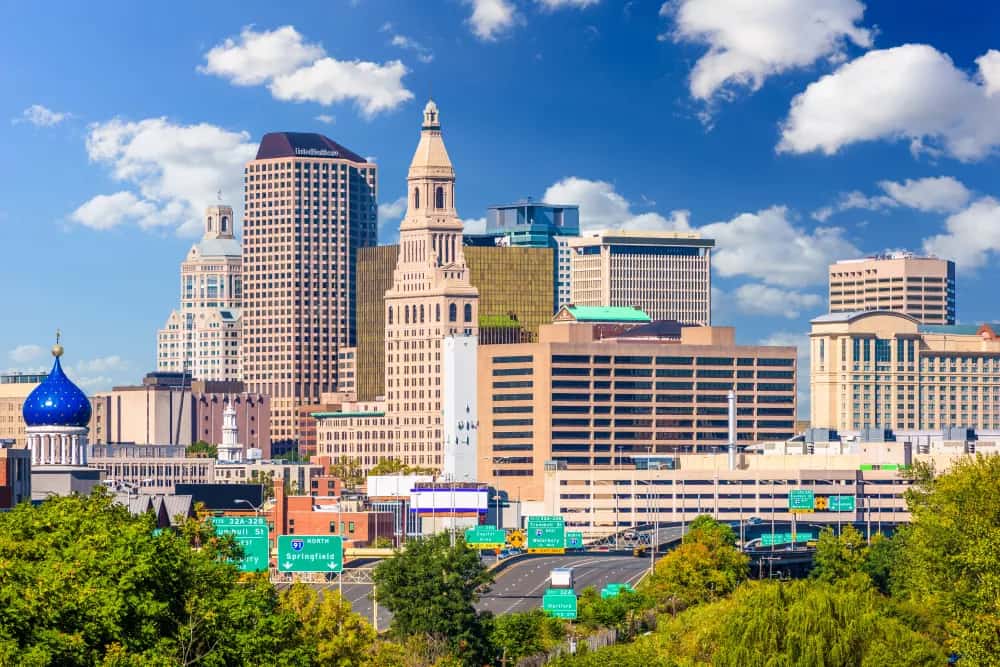
Hartford, Connecticut is one of America's oldest cities, founded in 1635 by Dutch traders and English Puritans. Located on the Connecticut River in central Connecticut, Hartford became famous not for manufacturing or trade, but for something unexpected: selling insurance.
Three Settlements Become One
Hartford began with three separate settlements. Dutch traders from New Amsterdam (New York) built a trading post called House of Hope in 1633. Two years later, English Puritans from Massachusetts led by Thomas Hooker founded a town they called Newtown, later renamed Hartford after Hertford, England.
Why did Hooker leave Massachusetts? He disagreed with Massachusetts's strict religious rules. Hooker wanted a government based on the consent of the governed, not just church members. His sermons influenced Connecticut's Fundamental Orders of 1639, one of the first written constitutions in America.
Connecticut Colony prospered as a farming and trading community. Hartford, positioned on the Connecticut River, became an important port. Ships sailed down the river to Long Island Sound, carrying goods to Boston, New York, and beyond.
The Charter Oak Legend
In 1687, Connecticut faced a crisis. King James II sent Sir Edmund Andros to take Connecticut's charter—the document granting the colony self-government. Legend says that during a meeting in Hartford, the candles suddenly went out. When light returned, the charter had disappeared. Captain Joseph Wadsworth had hidden it in a hollow oak tree.
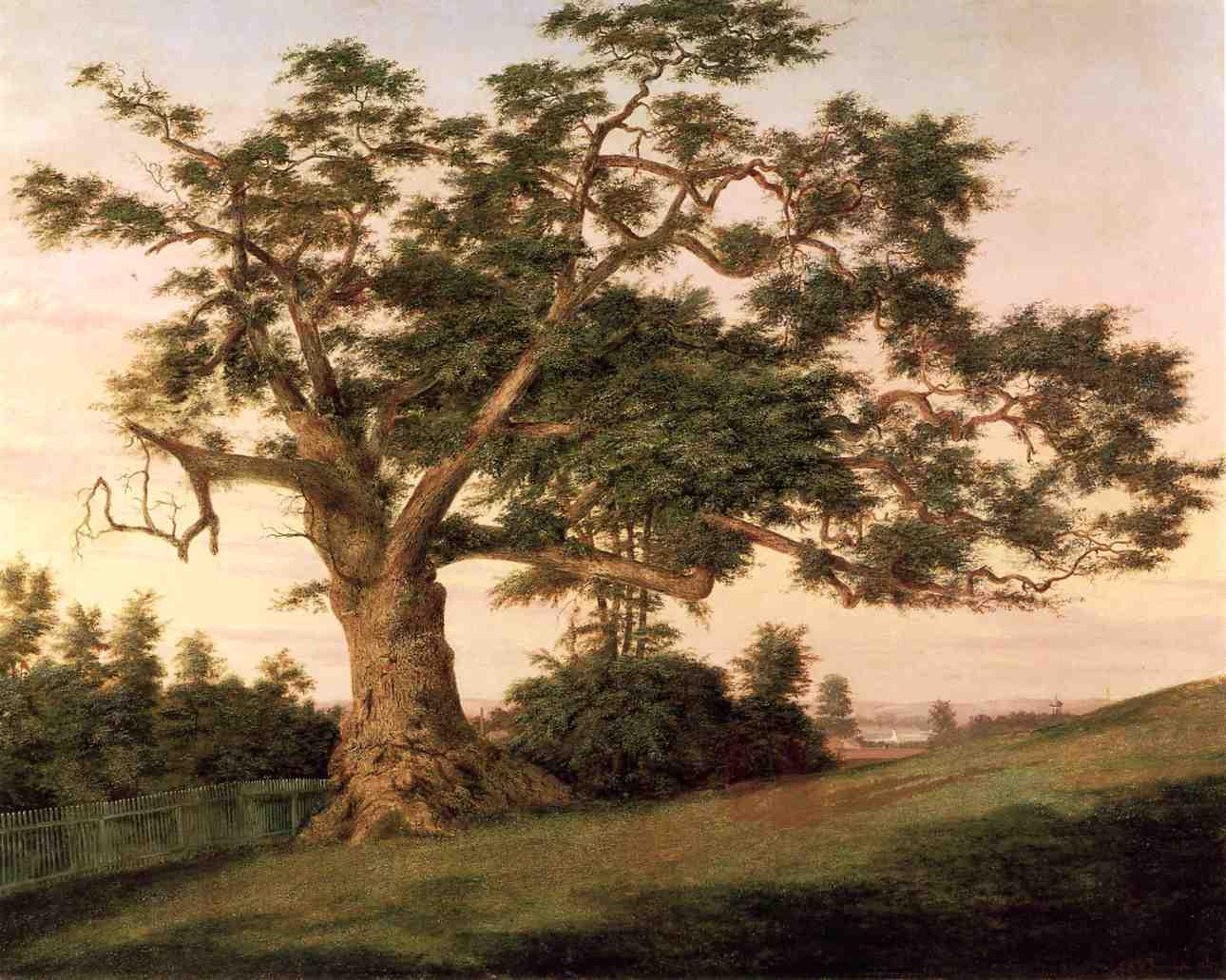
Whether entirely true or not, Connecticut kept its charter. The tree, called the Charter Oak, became Connecticut's symbol. When the ancient oak fell in a storm in 1856, Hartford residents made souvenirs from its wood. The Charter Oak still appears on Connecticut's state quarter.
Becoming the Insurance Capital
Hartford's transformation into the Insurance Capital began with a simple problem: fire. In 1794, Hartford merchants wanted fire insurance but had to buy it from companies in Philadelphia or New York. They decided to start their own company.
The Hartford Fire Insurance Company, founded in 1810, insured buildings against fire. The company prospered and grew. Other insurance companies followed—Aetna (1819), Connecticut General (1865), Travelers (1863). Why Hartford? The city's lawyers, accountants, and business infrastructure made it perfect for the insurance industry.
Insurance seems boring, but it's essential. Farmers need crop insurance. Homeowners need fire insurance. Businesses need liability insurance. Hartford's companies pioneered new types of insurance, spreading risk across thousands of policyholders.
By the late 1800s, Hartford was the undisputed insurance capital of America, then the world. Massive insurance company headquarters dominated downtown. Insurance executives became Hartford's elite.
Samuel Colt and Manufacturing
Hartford wasn't only insurance. Samuel Colt opened his firearms factory in Hartford in 1855. Colt's factory pioneered interchangeable parts and assembly line production. The Colt Armory, with its distinctive blue dome topped by a golden sphere and star, became a Hartford landmark.
Colt's success attracted other manufacturers. Typewriters, bicycles, machine tools—Hartford made them all. But insurance remained the city's identity.
Mark Twain's Hartford
America's greatest writer, Mark Twain (Samuel Clemens), lived in Hartford from 1874 to 1891. His ornate Victorian mansion in Hartford's Nook Farm neighborhood still stands, restored as a museum.
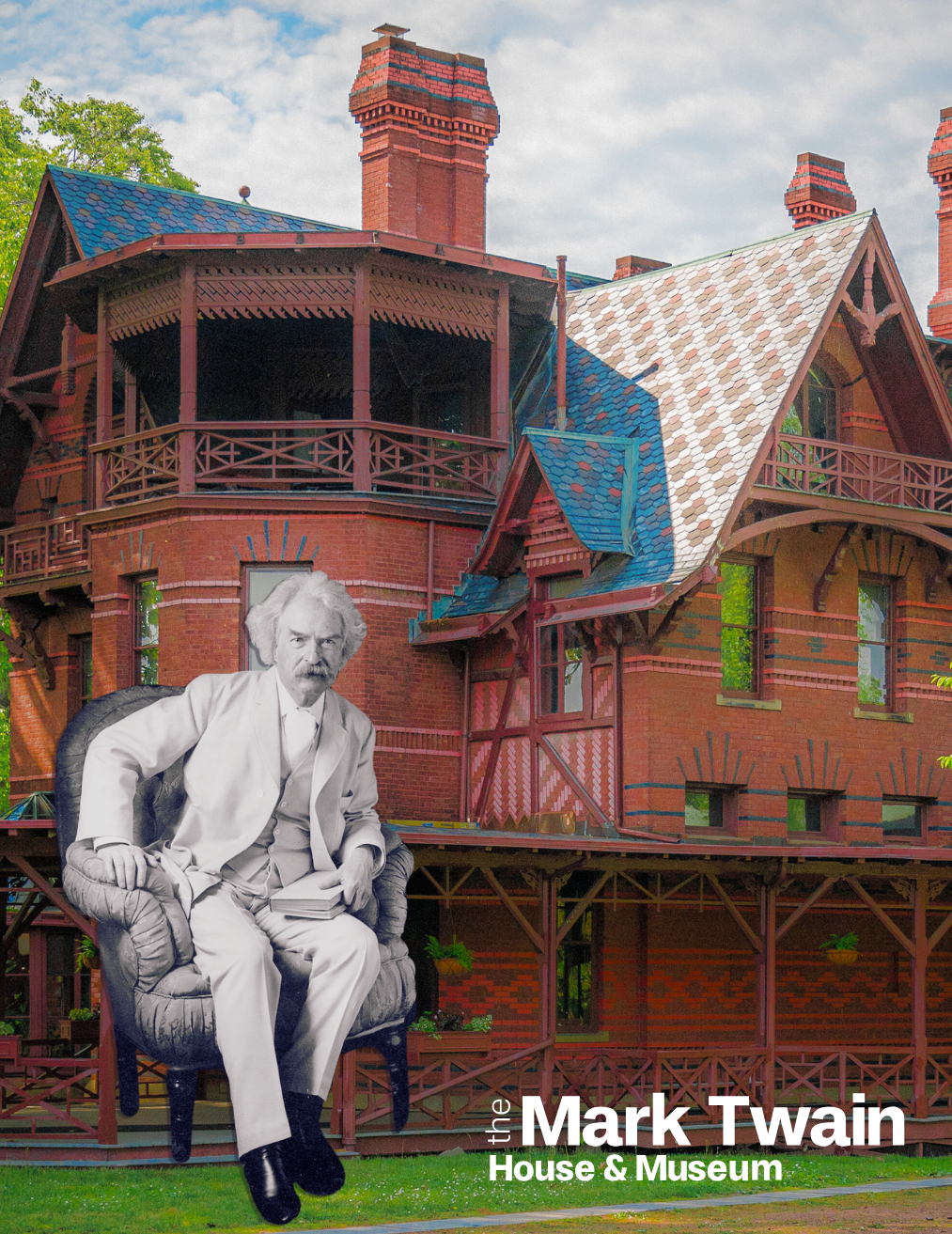
Twain wrote his most famous novels in Hartford—The Adventures of Tom Sawyer, Adventures of Huckleberry Finn, The Prince and the Pauper, and A Connecticut Yankee in King Arthur's Court. He loved Hartford's cultured society and literary community.
"Of all the beautiful towns it has been my fortune to see," Twain wrote, "this is the chief." His house featured innovations like indoor plumbing and a telephone, showcasing Hartford's progressive spirit.
The Connecticut State Capitol
Connecticut's Old State House, built in 1796, was the nation's oldest state house still serving its original purpose. But as Connecticut grew, the state needed a larger capitol.
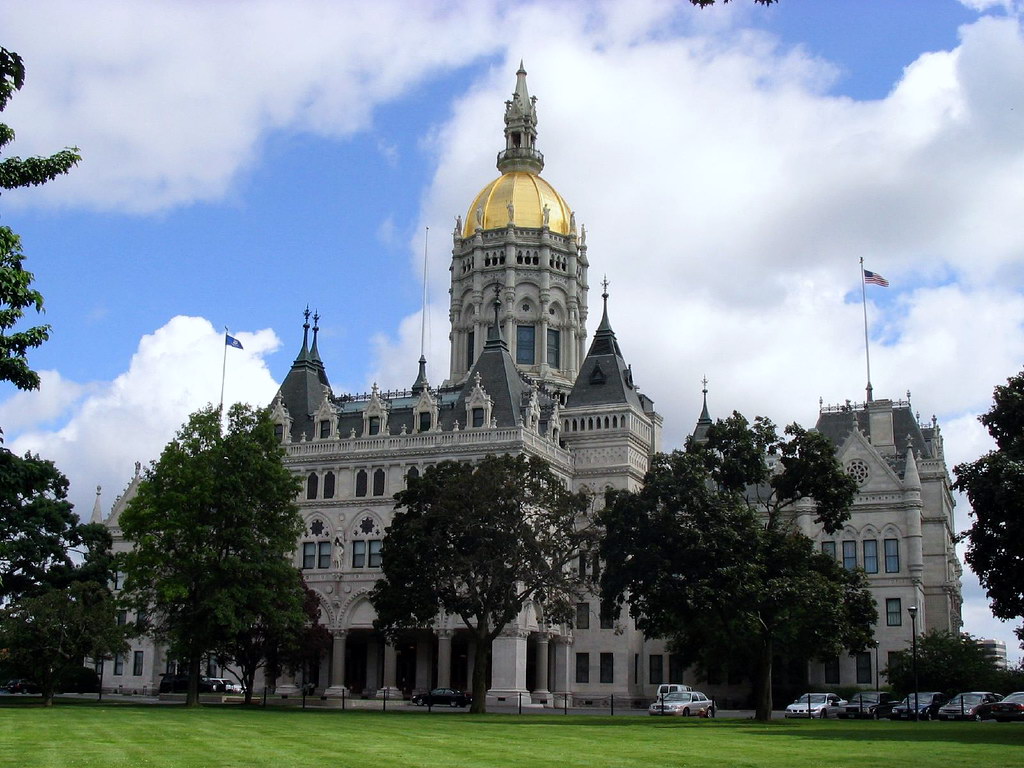
The new Connecticut State Capitol, completed in 1878, is one of America's most unique capitol buildings. Designed in High Victorian Gothic style, it features gold-leaf domes, colorful marble, and elaborate decorations. Inside, statues and paintings tell Connecticut's history.
Connecticut is unusual in having two capital cities. From 1701 to 1875, Hartford and New Haven alternated as co-capitals, with the legislature meeting six months in each city. In 1875, Hartford became the sole capital.
Modern Hartford
The 20th century brought challenges. Like many Northeastern cities, Hartford lost manufacturing jobs. Insurance companies merged or moved. Urban renewal projects of the 1960s demolished historic neighborhoods.
But Hartford persisted. Major insurance companies—The Hartford, Travelers, Aetna, United Healthcare—still headquarter here, employing thousands. The city has worked to revitalize downtown, preserving historic buildings while building new amenities.
The Bushnell performing arts center, Wadsworth Atheneum (America's oldest public art museum), and Connecticut Science Center attract visitors. Hartford's ethnic diversity—large Puerto Rican, Caribbean, and African populations—brings cultural richness.
From Puritan settlement to Charter Oak to Insurance Capital, Hartford shows that cities can build prosperity on ideas—like spreading risk through insurance—not just manufacturing. And sometimes the pen (like Mark Twain's) is mightier than the factory.