CHAPTER 4 · LESSON 1
Weathering
Slow Changes on Earth's Surface
California Science · Grade 4 · Earth Sciences
Slow Changes on Earth's Surface
California Science · Grade 4 · Earth Sciences
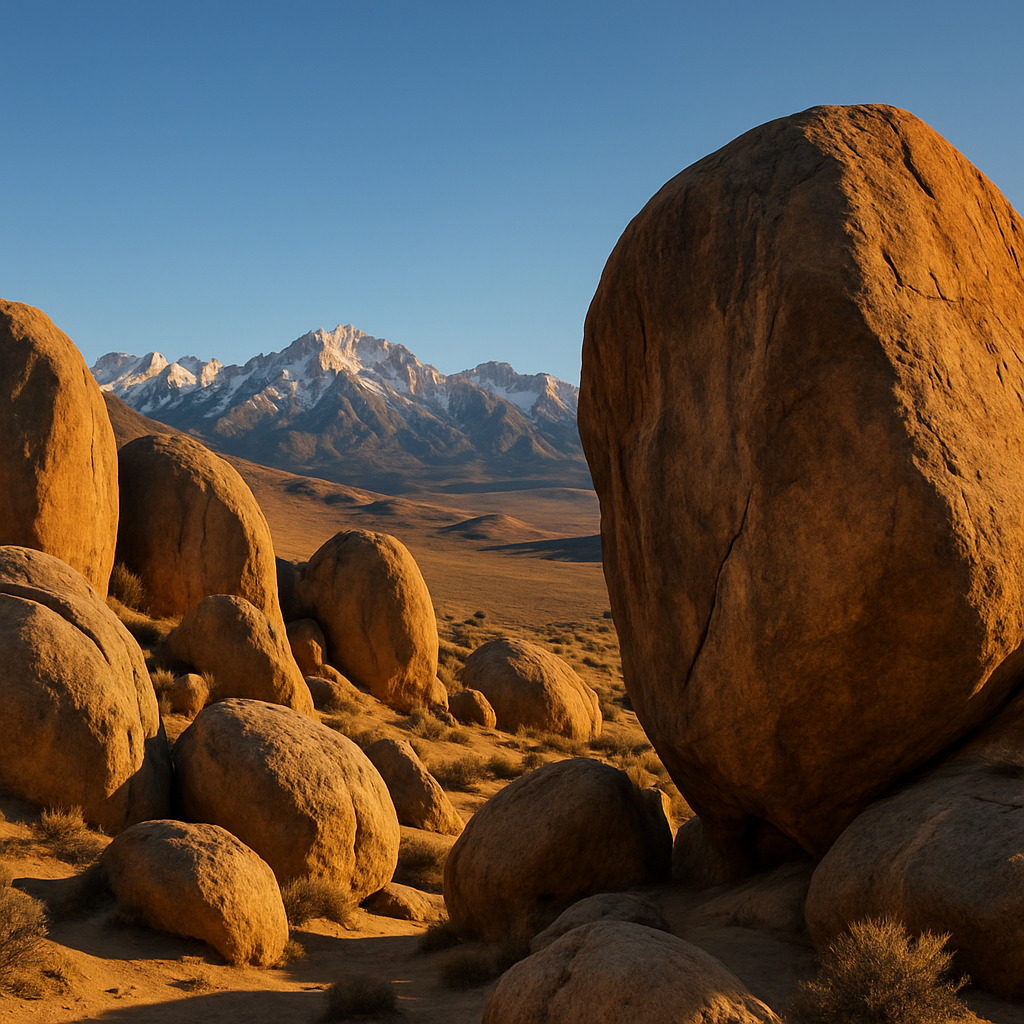
Look around at the rocks and mountains near your home. They might look like they've been there forever, but the truth is — rocks are constantly changing. They just change very, very slowly.
The process that breaks down rocks on Earth's surface is called weathering. Wind, water, ice, and even living things can all cause weathering. Over thousands and millions of years, weathering can turn huge boulders into tiny grains of sand!
There are two main types of weathering. Physical weathering breaks rocks into smaller pieces without changing what the rock is made of — like cracking a big cookie into crumbs. Chemical weathering actually changes the minerals inside the rock — like when iron turns to rust.
Definition: The breaking down of rocks on Earth's surface into smaller pieces by water, wind, ice, or living things.
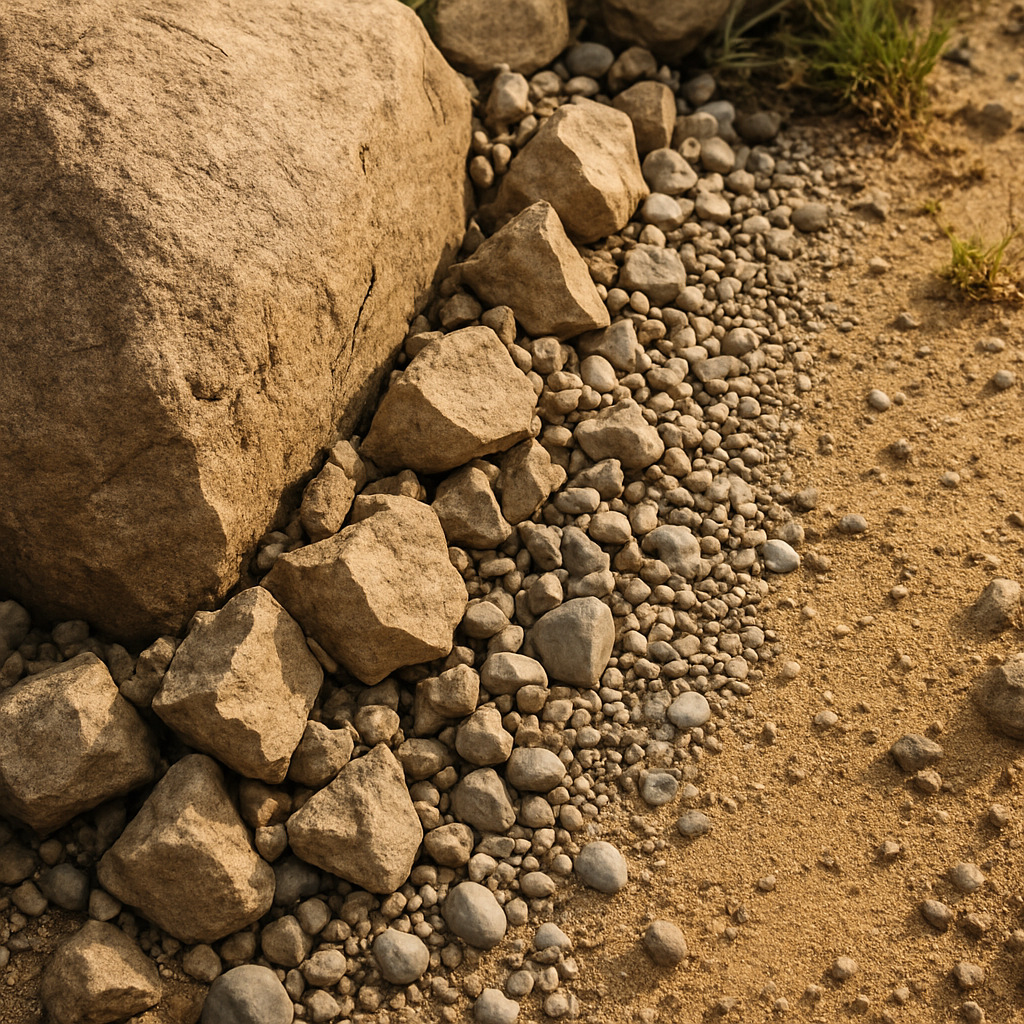
Physical weathering breaks rock into smaller pieces without changing what the rock is made of. Think of it like tearing a piece of paper — the pieces are smaller, but they're still paper. Here are some of the ways physical weathering happens:
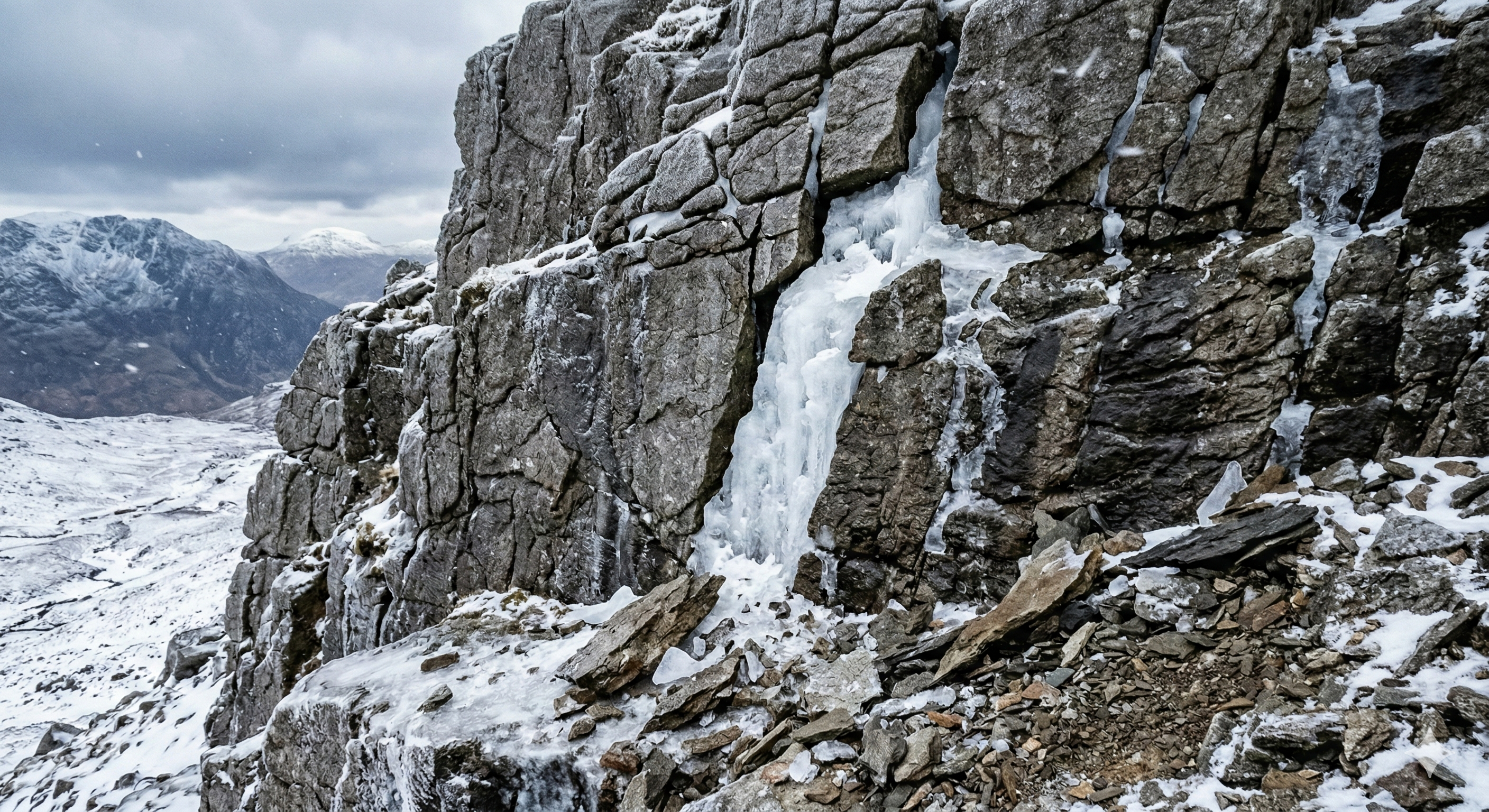
Water seeps into tiny cracks in rocks. When the temperature drops, that water freezes and turns into ice. Here's the key — ice takes up more space than liquid water! As the water expands into ice, it pushes against the sides of the crack, making it wider. When the ice melts, more water flows in. This cycle of freezing and thawing repeats over and over, and eventually the rock splits apart.
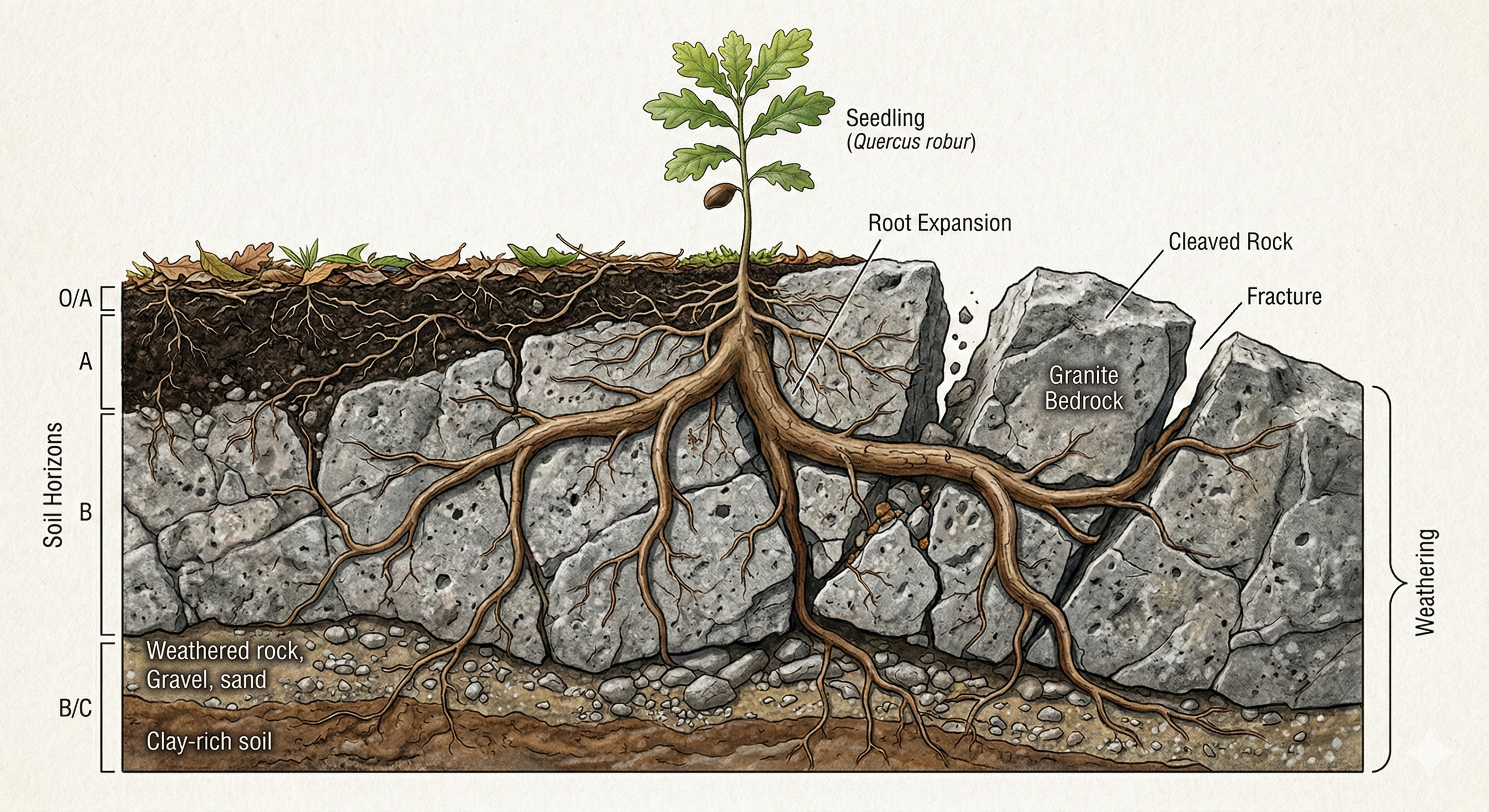
Have you ever seen a tree root pushing through a sidewalk? The same thing happens to rocks! Plant roots grow into small cracks in rocks. As the roots grow larger and thicker, they push the rock apart with incredible force. Over time, even the tiniest seed can split a massive boulder.
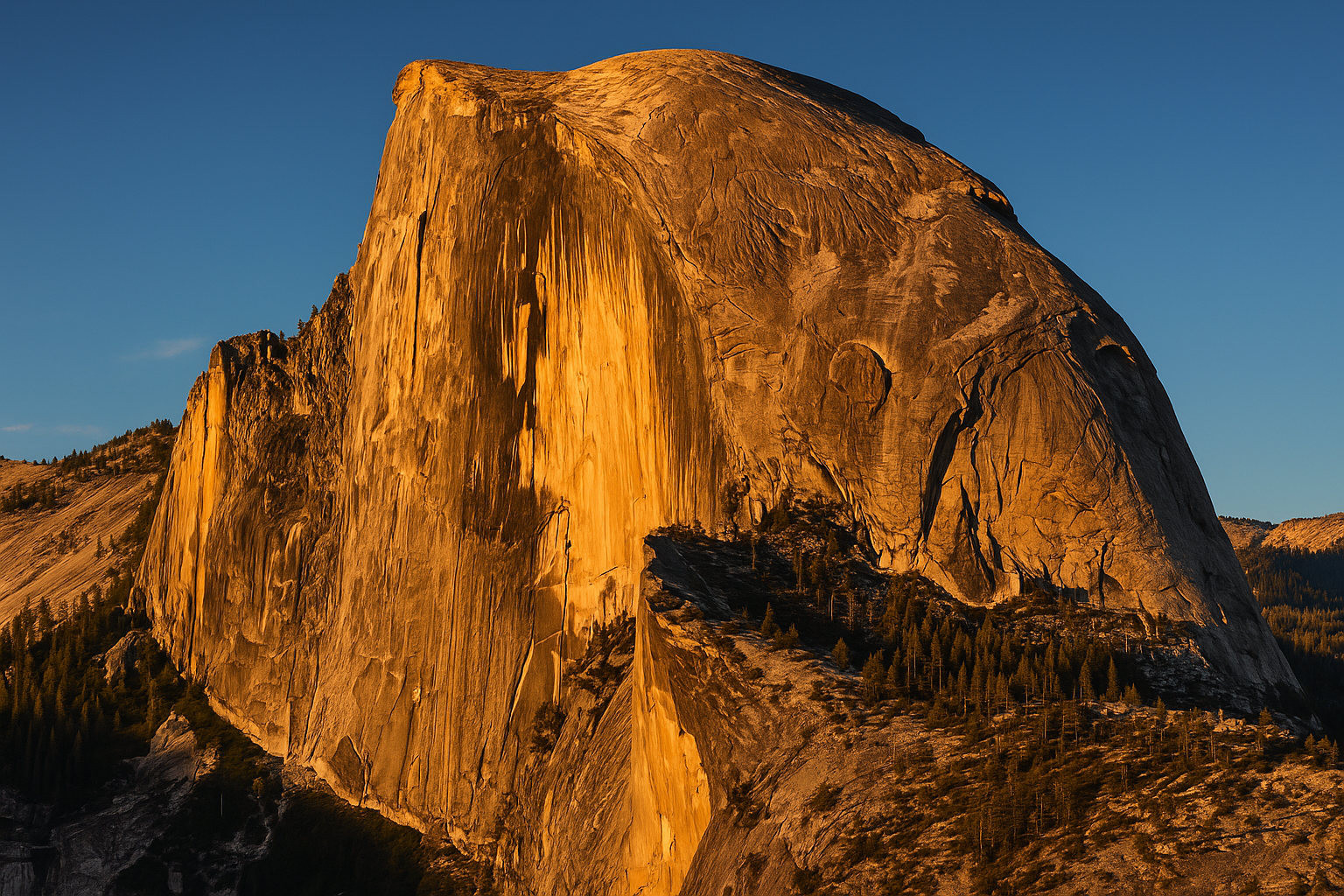
Some rocks weather in a surprising way — their outer layers peel off in sheets, kind of like peeling the layers of an onion! This process is called exfoliation (say it: eks-FOH-lee-AY-shun). It happens when pressure on the rock is released, causing the outer layers to expand and crack away. You can see exfoliation on large rock formations like Half Dome in Yosemite National Park.
Definition: When outer layers of rock peel off in sheets, like an onion.
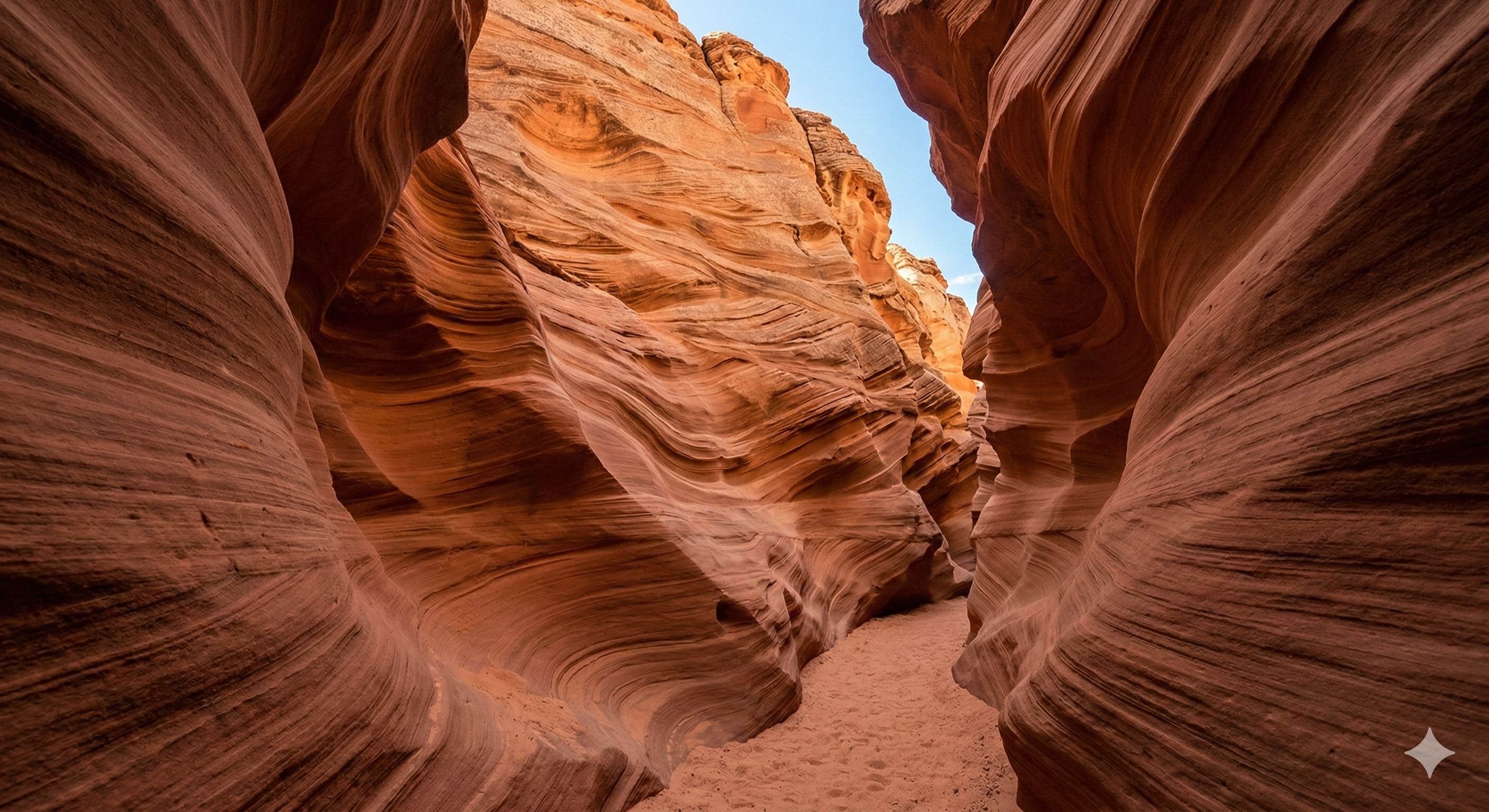
Wind can be a powerful force! When wind picks up sand and blows it against rocks, the sand acts like sandpaper, wearing away the rock's surface bit by bit. This is called abrasion (say it: uh-BRAY-zhun). Over time, wind abrasion can carve rocks into amazing shapes, creating arches, hoodoos, and other incredible desert formations.
Definition: The wearing away of rock by wind-blown sand particles.
How are freezing/thawing and plant roots similar as causes of physical weathering? Think about what both do to cracks in rocks.
Have you ever seen a worn stone statue or a rusty iron fence? Those changes were caused by chemical weathering. Unlike physical weathering, chemical weathering actually changes the minerals inside the rock. A rock can break down when the minerals in the rock are changed chemically.
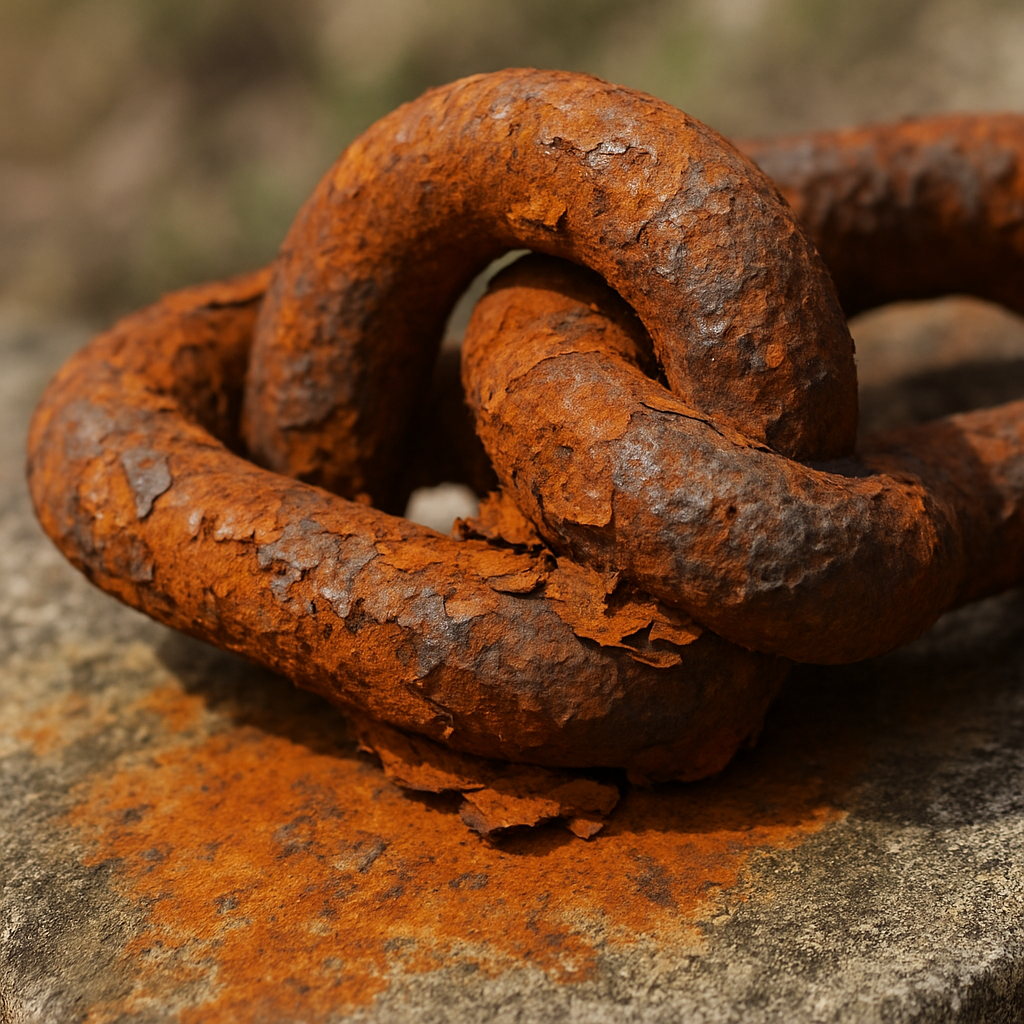
Have you ever seen an iron chain become rusty over time? When oxygen in the air dissolves in water and comes into contact with iron, it reacts to form rust. Rocks that contain iron can rust and break down the same way. A mineral called hematite contains iron — and when it rusts, the rock it's part of slowly crumbles apart.
Most of the water in rivers and in soil contains acids. Decaying plants put acids in the soil. Water soaking into the soil dissolves these acids. When dissolved acid comes into contact with rock, the acid reacts with the rock's minerals. The rock changes chemically, and after a long time, the rock changes shape and breaks down.
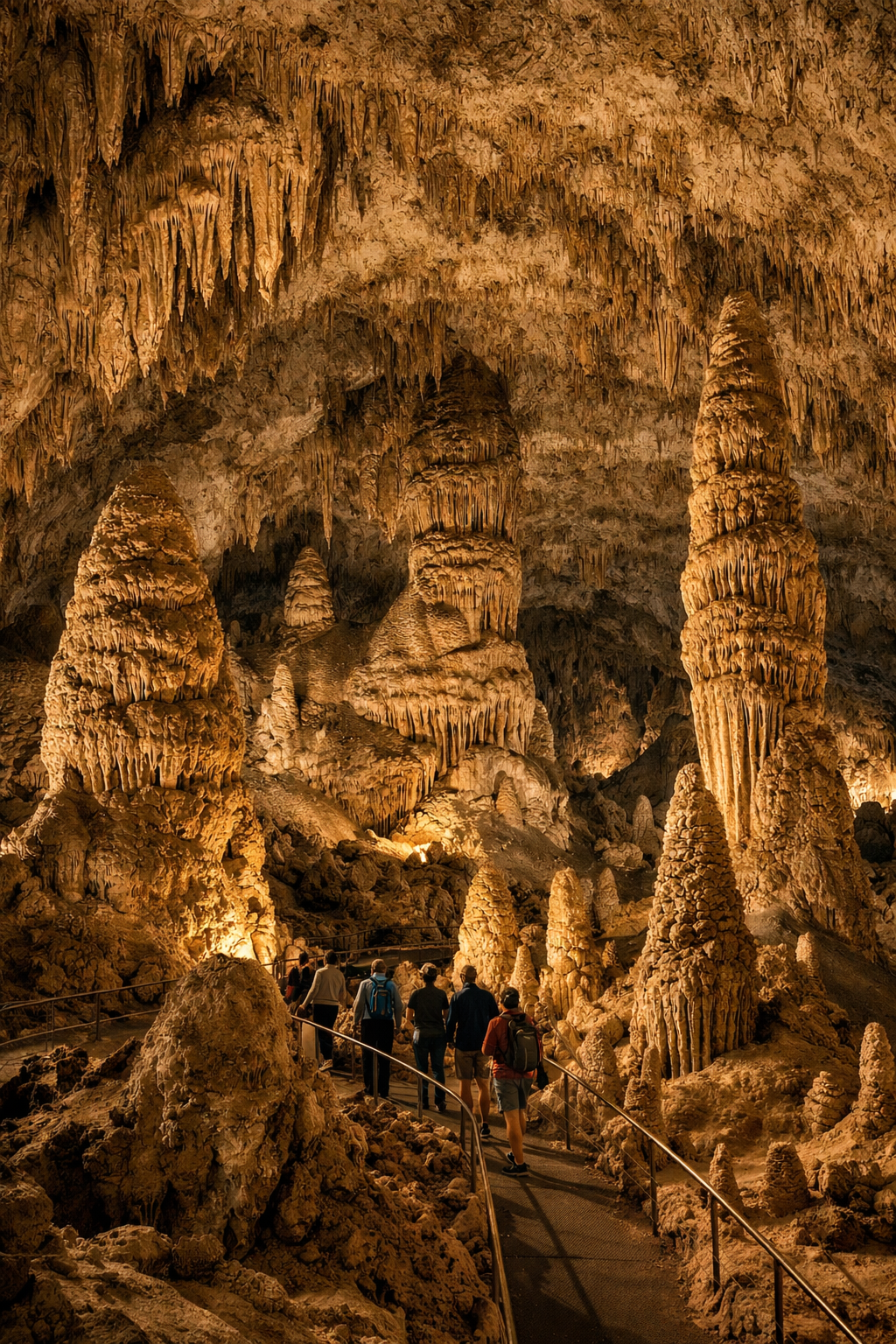
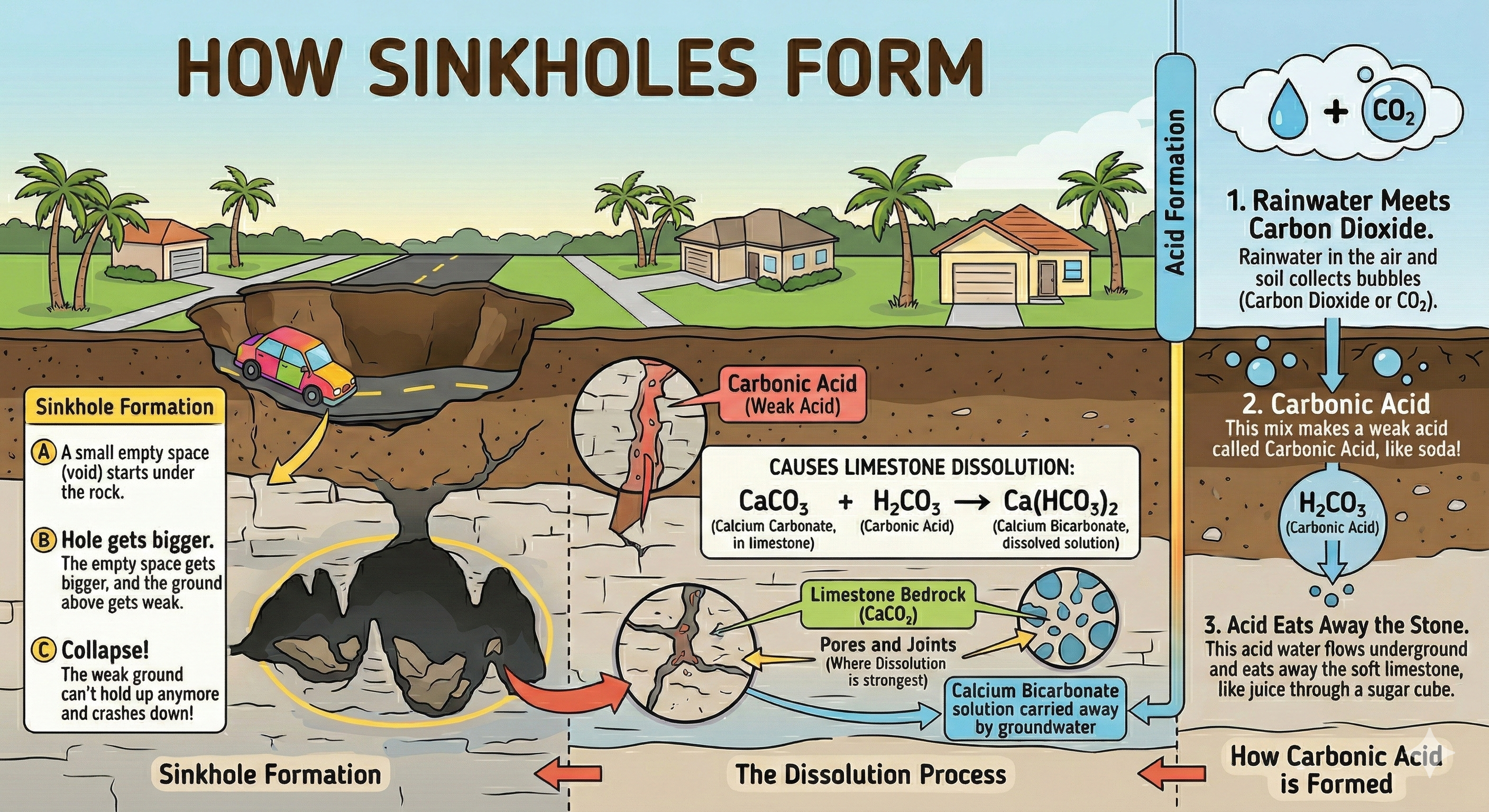
Carbon dioxide is a gas in the air that we breathe out. When it combines with rainwater, it forms a weak acid called carbonic acid (say it: kar-BON-ik AS-id). This weak acid can react with minerals in some rocks — especially limestone. Over millions of years, carbonic acid dissolves limestone underground, creating spectacular caves and caverns!
Definition: A weak acid that forms when carbon dioxide combines with rainwater. It can dissolve limestone.
Carbonic acid also weathers rocks in soil. Decaying plant and animal matter puts carbon dioxide into the soil. Rainwater enters soil and combines with the carbon dioxide, forming even more carbonic acid that breaks down rocks underground.
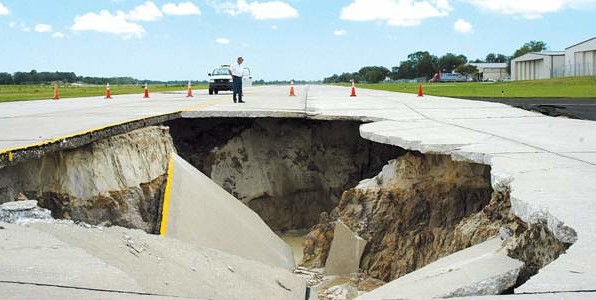
When enough limestone dissolves underground, the ground above can suddenly collapse — creating a sinkhole. Sinkholes are common in Florida, Texas, and other places where limestone sits just below the surface.
What is the same about all kinds of chemical weathering? Think about what happens to the rock's minerals.
Did You Know? Carlsbad Caverns in New Mexico has over 119 caves, all formed by chemical weathering! The largest chamber, called the Big Room, is almost 4,000 feet long — that's longer than 13 football fields!
If you look at soil with a magnifying glass, you'll find that it contains many things. Soil mostly consists of bits of weathered rock, minerals, and humus (say it: HYOO-mus). Humus is decayed plant or animal material — like fallen leaves that have broken down over time. Soil also contains water, air, and bacteria.
It can take thousands of years for weathering to break rocks down to form soil. That's why soil is so precious!
Over time, layers of soil called horizons (say it: huh-RY-zunz) form. Each horizon has its own properties:
The top layer — rich in humus, dark in color. This is where most plants grow their roots.
Below the topsoil — contains minerals that have washed down from the A Horizon. Less humus, lighter color.
Mostly broken-up bedrock. Very little humus. This layer is still being weathered into smaller pieces.
The solid, unweathered rock at the bottom. All the layers above eventually come from this rock breaking down.
Soil horizons are different from place to place. That's because the rocks and humus that make up soil are different from place to place. In some places, the horizons might be thick and rich; in others, they might be thin and rocky.
Definition: Decayed plant or animal material found in soil.
Definition: A layer of soil with its own properties.
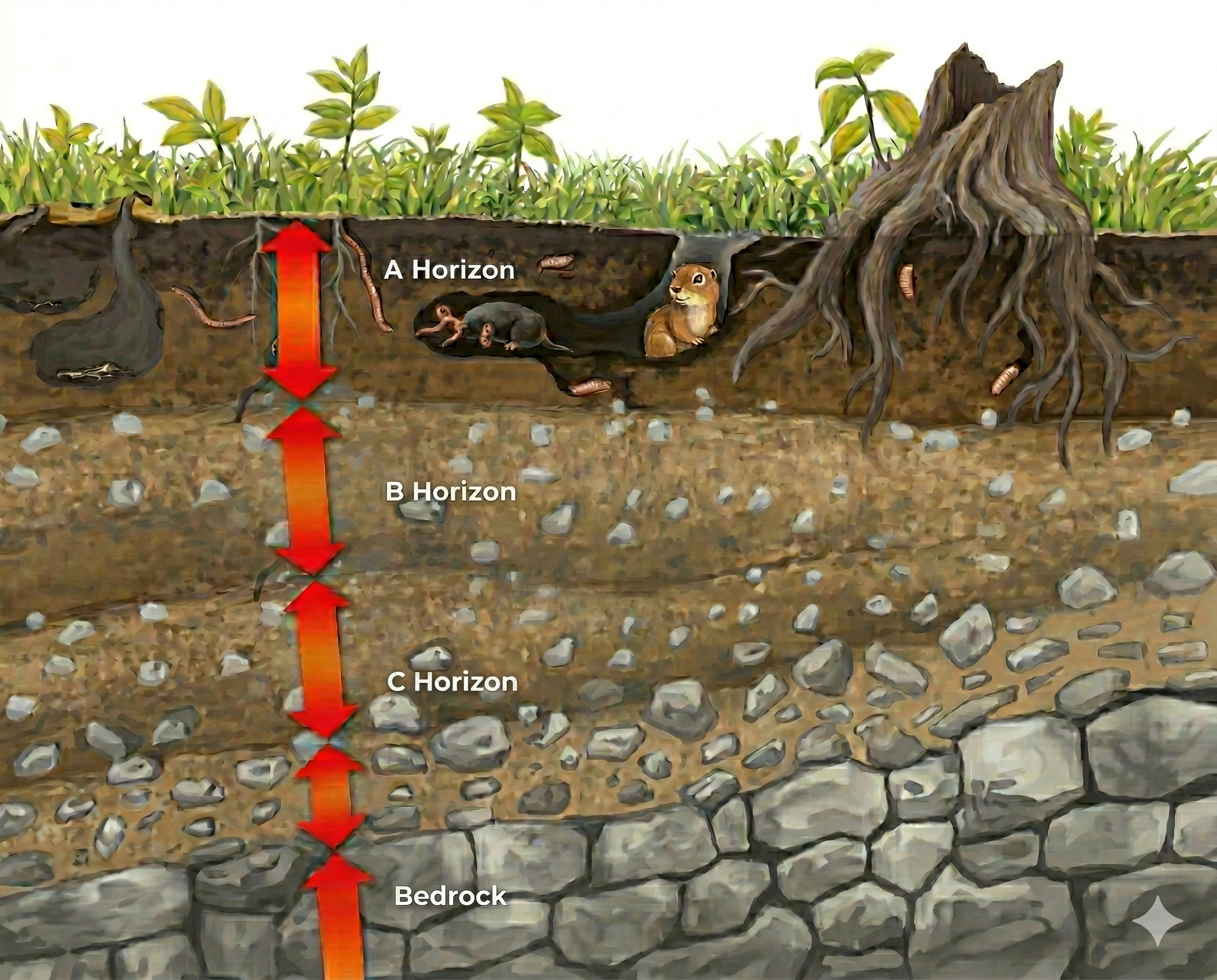
What is different about Horizons A, B, and C? Think about what each layer is made of.
Did You Know? It can take over 500 years to form just one inch of topsoil! That's why farmers and scientists work so hard to protect soil from washing away.
Weathering breaks down rocks on Earth's surface — slowly, over thousands or millions of years.
Physical weathering breaks rocks into smaller pieces (freeze-thaw, plants, exfoliation, abrasion).
Chemical weathering changes the minerals in rock (oxygen/rust, acids, carbonic acid).
Soil forms from weathered rock + humus, organized into horizons (A, B, C, bedrock).