The Sleeping Giant
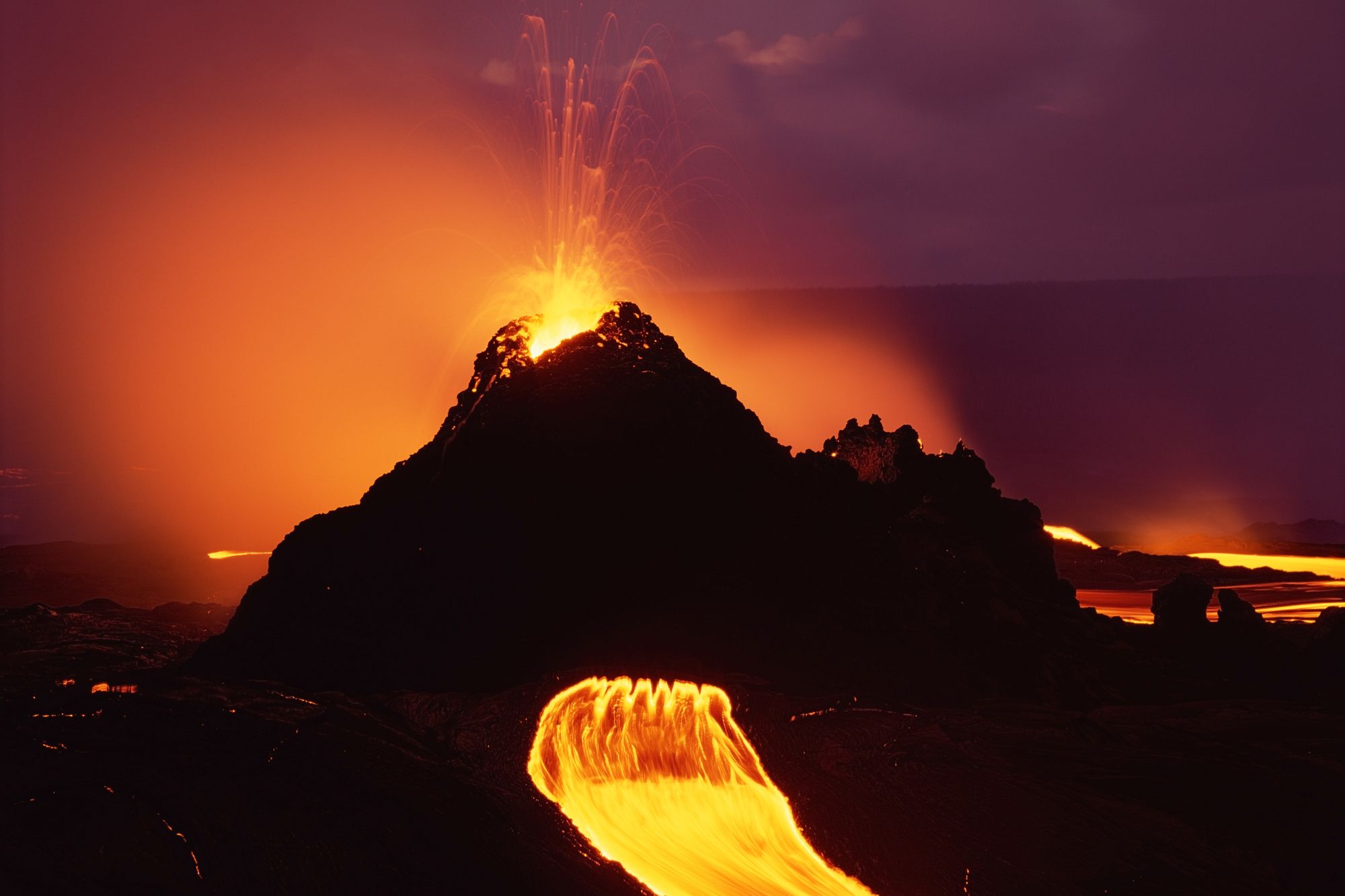
Kilauea volcano - one of the most active volcanoes on Earth
On a small island in the Pacific Ocean stood a mountain called Kilauea. The people who lived nearby called it Pele's Mountain, after the goddess of fire.
To most, it looked peaceful — green slopes, birds circling high, steam gently drifting from the top. But deep inside, something powerful was stirring.
Thousands of miles away, in a lab filled with blinking computers and maps, a young volcanologistA scientist who studies volcanoes named Dr. Lina Akeo stared at her screen. Her sensors near Kilauea were picking up tremorsSmall shakes or vibrations in the ground — tiny shakes in the ground.
"The mountain's heartbeat is quickening," she whispered.
She had studied volcanoesMountains that can erupt with lava, ash, and gases from inside the Earth since she was a little girl. Every volcano, she believed, had a story to tell — if you could learn to listen.
Lava Beneath the Surface
The ground beneath Kilauea was alive. Far below, melted rock called magmaMelted rock found deep under the Earth's surface churned in a huge underground chamber.
As heat and pressure built up, the magma looked for a way out — cracks, vents, and tunnels called lava tubes.
Dr. Lina explained it this way when visiting schools:
🌋 Dr. Lina's Explanation:
"Think of the Earth like a giant pot of soup. When it gets too hot, the bubbles rise to the top!"

Molten lava - magma that has reached the surface
That's what was happening now. The island's sensors began detecting swarms of small earthquakes — a sign that magma was moving closer to the surface.
The First Signs
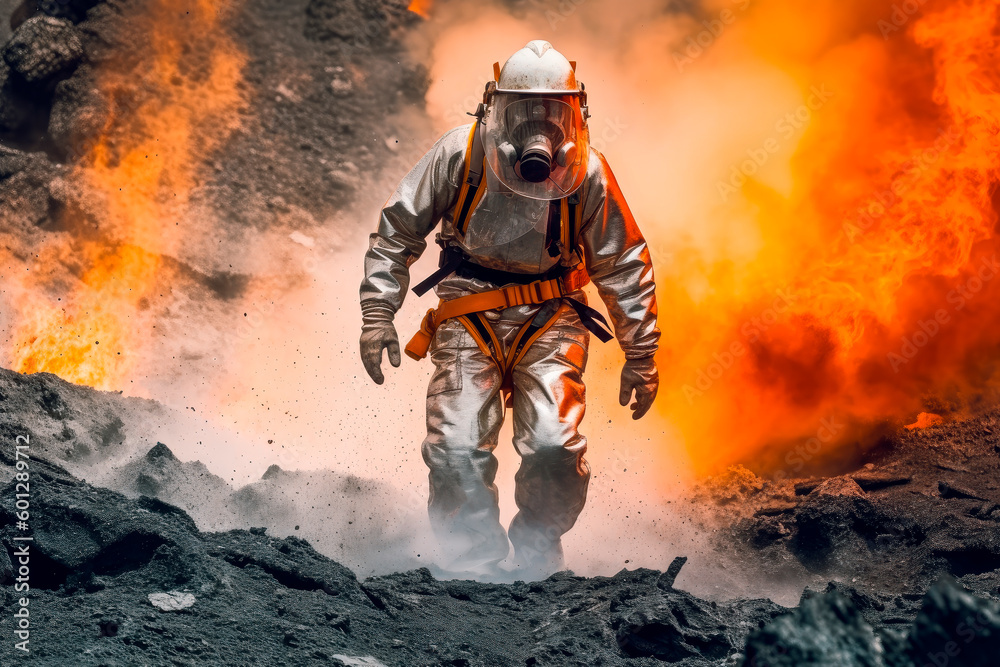
Volcanologist in protective gear monitoring volcanic activity
Days later, Lina hiked up the mountain trail to check her instruments. She wore a silver heat-resistant suit, and the air smelled faintly like rotten eggs — sulfurA yellow mineral that smells like rotten eggs, often found near volcanoes gas seeping from cracks in the ground.
Suddenly, she heard a crack — the sound of rock breaking. A thin line of glowing orange appeared across the black soil.
"It's starting," she said softly.
LavaMagma that reaches the Earth's surface began oozing down the slope, slow at first, then faster. The air shimmered with heat. Her instruments buzzed and flashed as they recorded data: temperature, gas, and seismicRelated to earthquakes or vibrations in the Earth waves.
The Eruption
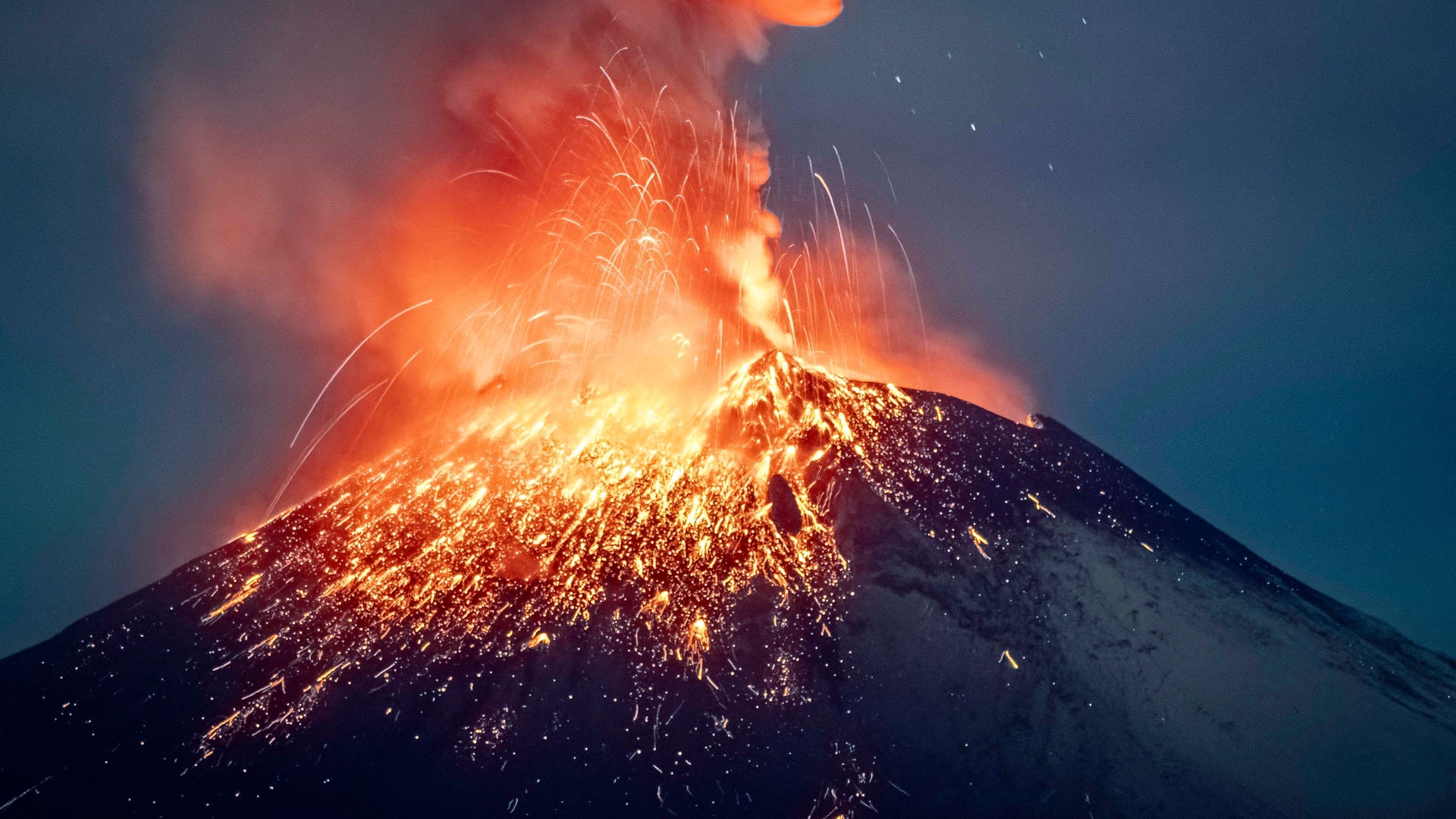
Volcanic eruption - lava fountains shooting into the night sky
The next day, the mountain roared. A deep rumble shook the earth, and the sky filled with ash and glowing sparks.
The ground split open, and fountains of lava shot high into the air — bright as the sun. Rivers of molten rock flowed through the forest, lighting up the night.
From a safe distance, Lina and her team watched and measured. They used drones and sensors to track how fast the lava moved and where it would go.
Though powerful, the eruptionWhen a volcano releases lava, gas, and ash wasn't a surprise — their instruments had given warning. The people nearby had time to evacuateTo move people away from danger.
🔬 Science Saves Lives:
"Science gives us eyes beneath the ground," Lina told a reporter. "It helps us understand our planet — and stay safe."
After the Fire
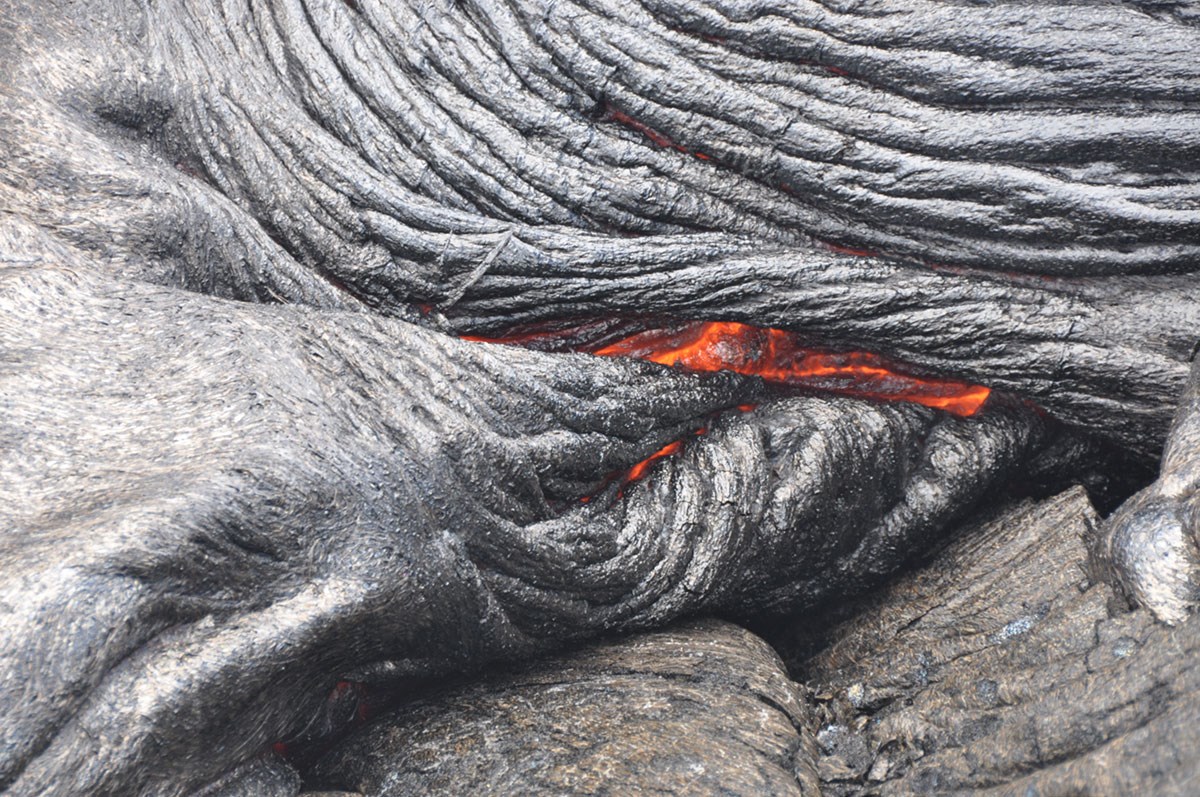
Pāhoehoe - smooth, rippled lava rock created when lava cools slowly
Weeks later, the eruption quieted. Where forests once stood, black rock now covered the ground — shiny, rippled lava rock called pāhoehoeSmooth, shiny lava rock formed when lava cools slowly.
But Lina smiled. She knew the island would recover. Tiny green ferns would soon sprout through the cracks. New soil, rich with minerals, would form over time.
Volcanoes destroy, yes — but they also create. Many islands, including Hawaii itself, were born from volcanoes like this one.
🌱 New Life After Fire:
"The Earth breathes fire so new life can begin," Lina said.
The Living Planet

The Ring of Fire - a horseshoe of volcanoes around the Pacific Ocean where most of Earth's eruptions occur
Back at her lab, Lina looked at a map showing volcanoes across the world — more than 1,500 active ones! Some under oceans, some near cities, some hidden under ice.
She thought of Kilauea — sleeping again, but never silent.
🌍 The Living Earth:
"The Earth is alive," she told her students. "It's always changing, always growing. Every mountain, every rock, has a heartbeat if you learn how to listen."