Frozen in Time
A Discovery Tale about Ice, Climate, and the Secrets of Earth's Past
Journey to Antarctica to discover how scientists read Earth's climate diary—frozen in ice for hundreds of thousands of years.
❄️ The Coldest Laboratory on Earth
At the very bottom of the world lies Antarctica—a continent of endless white, howling winds, and temperatures that can freeze water in seconds. Imagine a place where the temperature regularly drops below –100°F (–73°C), where winter nights last for six months straight, and where the only sounds are the whistle of the wind and the deep crack of shifting ice.
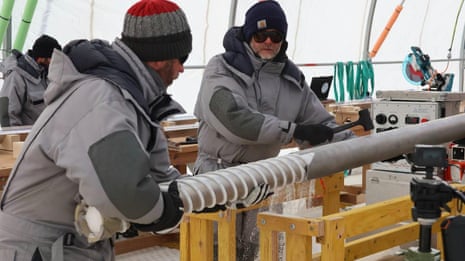
International teams of scientists at Vostok Station, Antarctica, drilling into Earth's frozen past
This is Antarctica—Earth's coldest, driest, and windiest continent. It's a place so harsh that no trees grow here, no animals except penguins and seals live on its coast, and humans can only survive with special equipment and heated shelters.
But beneath the deadly cold lies something extraordinary: the world's most complete record of Earth's climateThe long-term patterns of temperature and weather on Earth history. Antarctica holds ice that is millions of years old—ice that has been building up layer by layer, year after year, like pages in a frozen book.
🌍 Antarctica by the Numbers:
- • Size: 5.5 million square miles—larger than the United States and Mexico combined!
- • Ice thickness: Average of 1.2 miles (over 2 kilometers), with some spots nearly 3 miles deep
- • Amount of ice: Contains 70% of Earth's fresh water
- • Coldest temperature ever recorded: –128.6°F (–89.2°C) at Vostok Station in 1983
- • Wind speeds: Can exceed 200 mph during storms
In 1957, during the International Geophysical YearA global science project (1957–1958) that began modern Antarctic research, scientists from twelve nations agreed to work together to study Earth's most extreme environment. The United States, Soviet Union, France, Britain, Japan, Australia, and others set aside their political differences to answer a simple question: What can the ice tell us about our planet?
They built research stations—small clusters of heated buildings surrounded by thousands of miles of ice. At places like Vostok Station (Russia), McMurdo Station (USA), and Dumont d'Urville (France), scientists began drilling into the ice to extract long cylinders called ice coresA long tube of ice drilled from glaciers or ice sheets that records past climate.
These weren't just chunks of frozen water. Each ice core was a time capsule—a vertical library containing snow that fell centuries, millennia, even hundreds of thousands of years ago. Every layer held clues: dust from ancient volcanoes, pollen from plants long extinct, and most importantly—tiny bubbles of ancient air.
🔬 The Scientists of the Ice
Among the many brave researchers who traveled to Antarctica was Dr. Claude Lorius, a French glaciologist who would change our understanding of Earth's climate forever.
In 1965, Lorius was working at a remote Antarctic camp, drilling ice cores and cataloging samples. The work was exhausting—each day involved hours of drilling in sub-zero temperatures, carefully extracting cylinders of ancient ice, and documenting every detail.
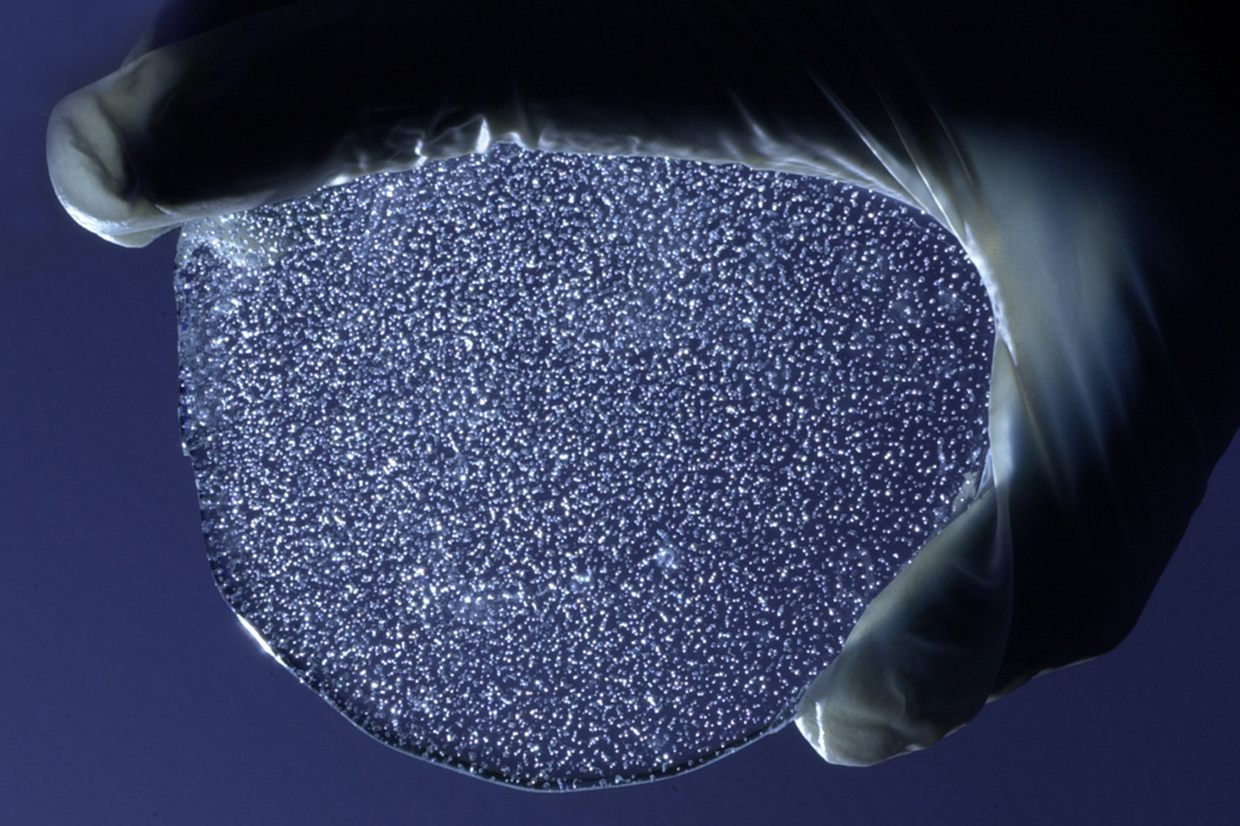
Tiny bubbles of ancient air preserved in glacial ice
One evening, after a long day's work, Lorius and his team were celebrating a colleague's birthday. They had no fresh water to mix with their drinks, so Lorius took a chip of ice from one of the old core samples they'd drilled earlier.
As the ice melted in his glass, he heard a soft fizzing sound. Looking closer, he saw thousands of tiny bubbles rising to the surface—bubbles that had been trapped in the ice for thousands of years.
And then it hit him.
"If this ice holds ancient air," Lorius realized, "then it holds the story of Earth's atmosphereThe layer of gases surrounding the Earth."
💡 Lorius's Breakthrough Discovery:
When snow falls in Antarctica, it's so cold that it never melts. Instead, it gets buried by more snow. Over centuries, the weight of new snow compresses the old snow into solid ice. But tiny air pockets—bubbles—get trapped inside.
Those bubbles contain samples of Earth's atmosphere from the exact year that snow fell. By measuring the gases inside ancient ice, scientists could reconstruct what the air was like thousands of years ago!
That simple observation—fizzing bubbles in a birthday drink—sparked decades of groundbreaking research. Lorius dedicated his life to studying ice cores, and inspired hundreds of scientists to join the quest.
Other researchers joined the mission:
- Dr. Jean Jouzel (France) helped decode the chemical signals in ice to understand past temperatures and rainfall patterns.
- Dr. Ellen Mosley-Thompson and Dr. Lonnie Thompson (USA) drilled ice cores not only in Antarctica but also in mountain glaciersA slow-moving river of ice formed by packed snow in the Andes, Himalayas, and Kilimanjaro—proving that ice could tell climate stories from all over the world.
- Dr. Richard Alley (USA) became one of the world's leading experts on rapid climate change, showing how Earth's temperature has shifted dramatically in the past.
Together, these scientists and hundreds of others formed an international community dedicated to one goal: reading the planet's frozen diary, one bubble at a time.
🧊 The Deepest Core
In the 1990s, an ambitious project began at Vostok Station—a joint effort between French and Russian scientists. Their goal was audacious: drill deeper into the ice than anyone had ever gone before.
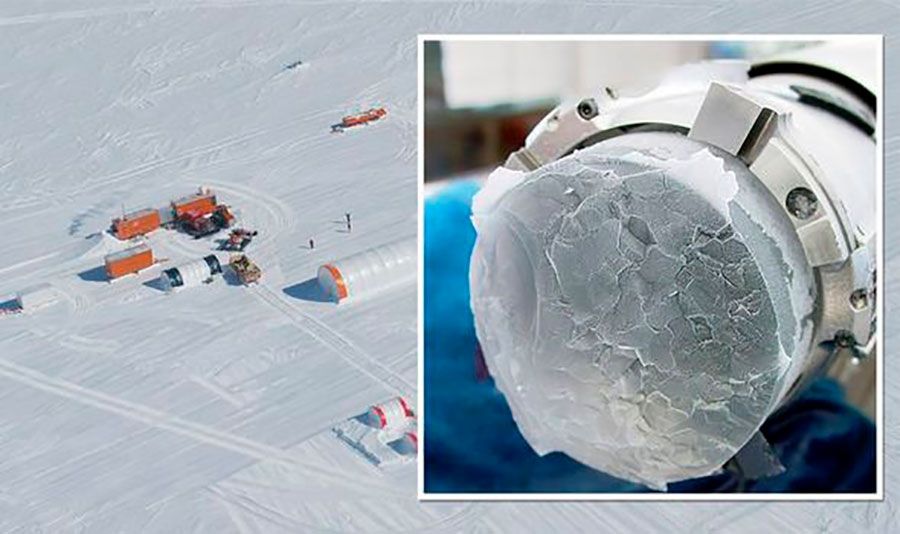
EPICA Dome C drilling station in Antarctica, where scientists retrieved ice over 800,000 years old
Drilling in Antarctica is incredibly difficult. The ice is so thick that it takes years to drill down even a mile. The drill bit must cut through ice colder than any freezer, while scientists carefully extract each section without contaminating or breaking the fragile core.
In 1998, after years of drilling, the Vostok team reached ice that was over 420,000 years old—ice that formed before modern humans even existed!
But the discoveries didn't stop there. A few years later, another international project called EPICAA European project that drilled some of the oldest ice cores on Earth (European Project for Ice Coring in Antarctica) drilled at Dome C, another location in Antarctica. In 2004, the EPICA team retrieved ice that was even older: over 800,000 years old—nearly a million years of Earth's history preserved in frozen layers.
🔬 What Scientists Found in the Ice:
- • Ancient air composition: The exact amounts of oxygen, nitrogen, carbon dioxideA gas that plants need but that also warms the planet when there's too much, and methane in the atmosphere over hundreds of thousands of years
- • Temperature records: By analyzing hydrogen isotopes in the ice, scientists calculated ancient temperatures
- • Volcanic eruptions: Layers of ash and sulfur from massive eruptions worldwide
- • Dust patterns: Showed when Earth was dry and windy during ice ages
- • Ice age cycles: Clear evidence of at least eight major ice ages in the past 800,000 years
Each clear cylinder of ice looked simple—just frozen water. But when scientists sliced thin sections and analyzed them under microscopes and mass spectrometers, they discovered an extraordinary pattern.
Whenever carbon dioxide (CO₂) levels in the ancient air were high, Earth's temperature was warm. When CO₂ levels dropped, the planet cooled, triggering ice ages that covered much of North America and Europe in glaciers.
The correlation was unmistakable. Over hundreds of thousands of years, CO₂ and temperature moved together like a dance—rising and falling in rhythm.
"The ice is our oldest witness," Dr. Jouzel said. "It remembers everything—every volcanic eruption, every warm period, every ice age. And it never lies."
⚠️ Warnings in the Ice
The ice cores revealed a powerful story about Earth's climate. But they also revealed something alarming about the present.
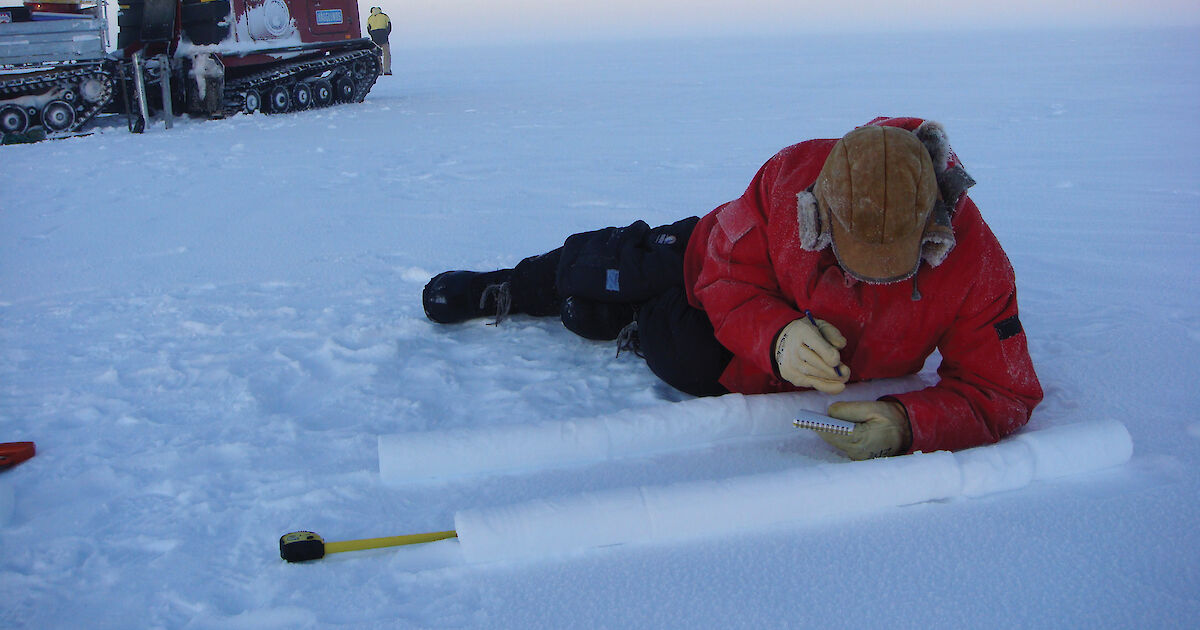
Researchers comparing atmospheric samples from ancient ice and modern air
When scientists compared modern air samples to the ancient bubbles trapped in ice, they discovered something unprecedented:
Today's CO₂ levels are higher than anything seen in the past 800,000 years.
For hundreds of thousands of years, atmospheric CO₂ ranged between about 180 parts per million (ppm) during ice ages and 280 ppm during warm periods. That natural cycle repeated over and over.
But starting around 1850—when humans began burning large amounts of coal, oil, and gas (called fossil fuelsEnergy sources like coal and oil that release CO₂ when burned)—CO₂ levels began to climb. By 2023, atmospheric CO₂ had reached over 420 ppm, far higher than any natural peak in the ice core record.
📊 The Evidence is Clear:
- • Natural CO₂ range (past 800,000 years): 180–280 ppm
- • CO₂ in 1850 (before industrial revolution): ~280 ppm
- • CO₂ today: Over 420 ppm and rising
- • Rate of increase: Faster than any natural change seen in ice cores
The ice cores prove that Earth is warming faster than at any point in the past 800,000 years—and that the cause is human activity, not natural climate cycles.
This discovery was sobering. The ice showed that Earth's climate was incredibly sensitive to CO₂. Even small changes in the past had triggered ice ages or warm periods lasting thousands of years.
Dr. Lorius, who had spent decades studying the ice, dedicated the rest of his life to sharing this urgent message with the world.
"The ice tells us what we have done," he said in interviews and lectures. "Now it's our turn to listen—and to act."
He wasn't alone. Scientists like Dr. Mosley-Thompson traveled to schools, gave public talks, and worked with governments to explain what the ice cores revealed. The message was clear: humans have changed Earth's atmosphere in unprecedented ways, and we must work together to preserveTo keep something safe so it lasts into the future a livable planet for future generations.
🌏 A Message for the Future
Today, the work continues. New projects like Beyond EPICA aim to drill even deeper—to ice more than 1.5 million years old. Scientists hope these ancient samples will reveal how Earth's climate worked before the current ice age cycles began, helping us understand what might happen as the planet continues to warm.
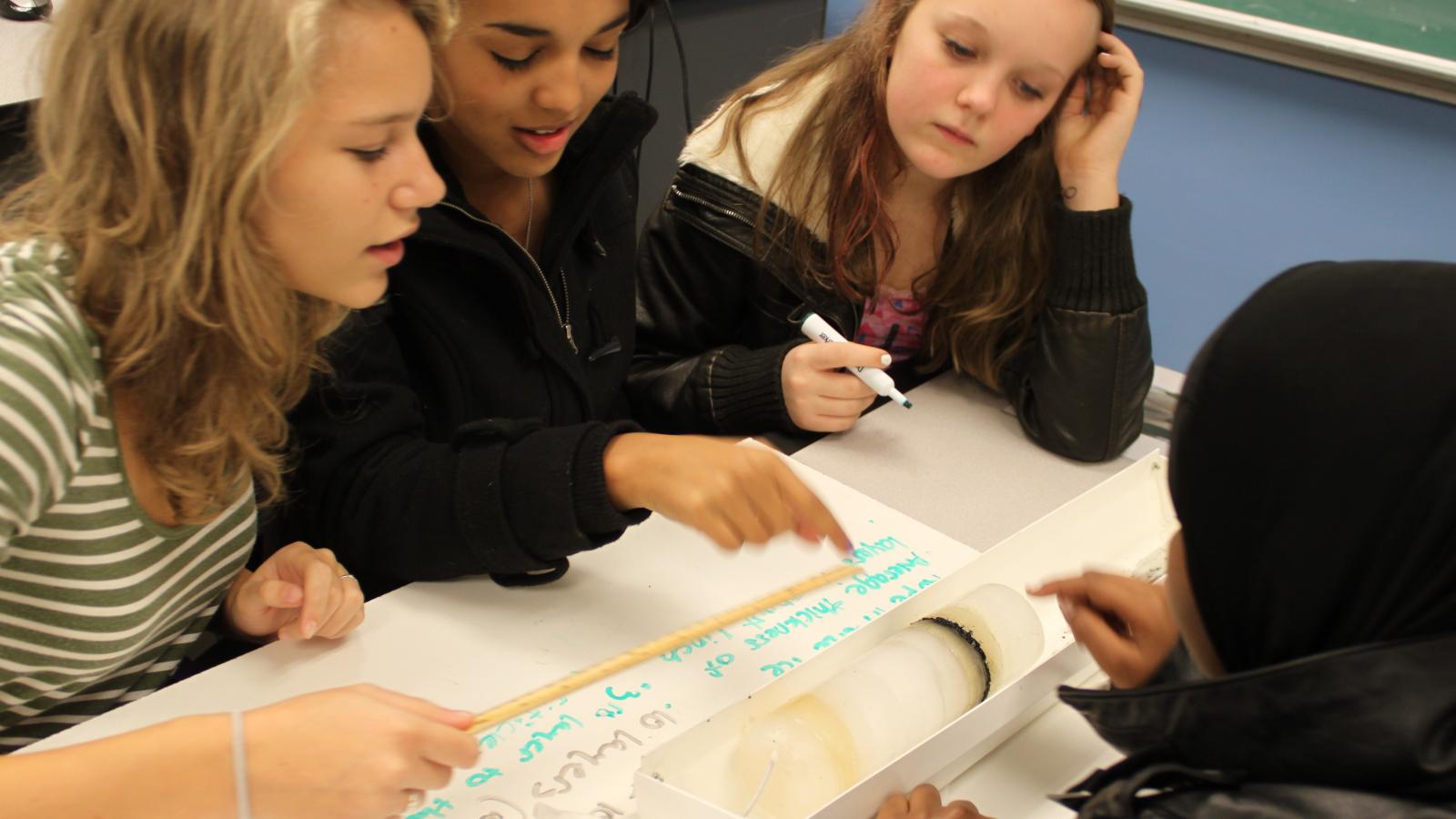
Young scientists learning from ice cores—the next generation of climate researchers
In classrooms around the world, teachers show real ice core photographs—long, glowing blue cylinders filled with thousands of tiny bubbles. Students marvel at the beauty of ancient ice and learn to read the layers like pages of a book.
"This is the planet's diary," Dr. Mosley-Thompson tells young audiences. "Every layer is a page, and every bubble is a word. If we learn to read it carefully, the ice will teach us how to protect our home."
🌱 What Can We Do?
The ice cores show us that Earth's climate is changing faster than ever before. But they also remind us that change is possible. Here's how young people can help:
- • Learn and share: Understanding climate science helps you make informed choices and teach others
- • Reduce energy use: Turn off lights, walk or bike when possible, and encourage your family to use renewable energy
- • Protect nature: Trees and plants absorb CO₂, so planting trees and protecting forests helps balance the atmosphere
- • Think about the future: Every choice we make today affects the planet tomorrow—choose wisely
- • Ask questions: Scientists like Lorius changed the world by being curious. Your questions matter too!
The ice cannot speak with words, but its message is clear: Earth's climate has always changed, but never this fast. The same ice that recorded ancient volcanic eruptions, ice ages, and warm periods is now recording our time—a time when humans have the power to change the planet.
And though the ice is silent, frozen, and far away at the bottom of the world, it continues to whisper an urgent truth:
"Protect what you have learned, and keep the Earth's story going."
The scientists who drilled into Antarctica's ice gave us an extraordinary gift—the ability to see hundreds of thousands of years into the past. Now it's our turn to use that knowledge to shape the future.
The ice remembers everything. What will it remember about us?
💬 Think About It
1. How did Claude Lorius first realize that ice could record Earth's history?
Think about what he noticed when melting old ice in his drink.
2. What do the gases in ancient ice tell us about the climate?
Consider the relationship between CO₂ and temperature over time.
3. Why are today's CO₂ levels important to study?
Think about how they compare to the past 800,000 years.
4. How can young scientists help protect the planet for the future?
What actions can you take based on what the ice cores teach us?
🔬 Try It Yourself: Earth's Timeline in Ice
Create your own mini ice core to understand how scientists read Earth's history!
What You'll Need:
- A clear plastic cup or small container
- Water
- Food coloring (blue, white/clear, gray, brown)
- A freezer
- Optional: small bits of herbs, coffee grounds, or glitter to represent volcanic ash or dust
Instructions:
- Fill your cup with 1 inch of water mixed with blue food coloring (representing a "snowy ocean year")
- Freeze it solid (about 2-3 hours)
- Add another layer of plain water or white-tinted water (representing a "calm snowy year")
- Freeze again
- Add a gray layer with a few coffee grounds mixed in (representing a "volcanic eruption year with ash")
- Freeze again
- Repeat with different colors and materials to create 5-6 distinct layers
- Once fully frozen, carefully remove from the cup or cut through it to see your layers
Think About It:
- Count your layers like pages of a story—what does each one represent?
- If you were a scientist 1,000 years in the future finding this ice, what could you learn about the time it was made?
- How is this similar to what scientists do with real ice cores from Antarctica?
- What would happen to the story if the ice melted? (This is why preserving glaciers matters!)
🎓 Extension Challenge: Climate Detective
Research current atmospheric CO₂ levels and create a graph comparing:
- CO₂ during ice ages (180 ppm)
- CO₂ during warm periods in the past (280 ppm)
- CO₂ in 1850 before the industrial revolution (280 ppm)
- CO₂ today (420+ ppm)
Present your graph to your class and explain what it means for Earth's future. Bonus: research what scientists predict will happen if CO₂ levels keep rising!
📚 Vocabulary
Ice Core
A long tube of ice drilled from glaciers or ice sheets that records past climate
Atmosphere
The layer of gases surrounding the Earth
Carbon Dioxide (CO₂)
A gas that plants need but that also warms the planet when there's too much
International Geophysical Year
A global science project (1957–1958) that began modern Antarctic research
EPICA
A European project that drilled some of the oldest ice cores on Earth
Fossil Fuels
Energy sources like coal and oil that release CO₂ when burned
Climate
The long-term patterns of temperature and weather on Earth
Glacier
A slow-moving river of ice formed by packed snow
Atmospheric Record
Information about past air stored in ice or rocks
Preserve
To keep something safe so it lasts into the future