The Girl Who Dug Up a Giant
A Discovery Tale about Fossils, Curiosity, and the History Beneath Our Feet
Discover how Mary Anning uncovered prehistoric giants and changed our understanding of Earth's ancient past.
The Cliffs by the Sea
On the southern coast of England, in a little town called Lyme Regis, the waves crashed against tall cliffsA steep rock face, especially by the sea made of clay and stone.
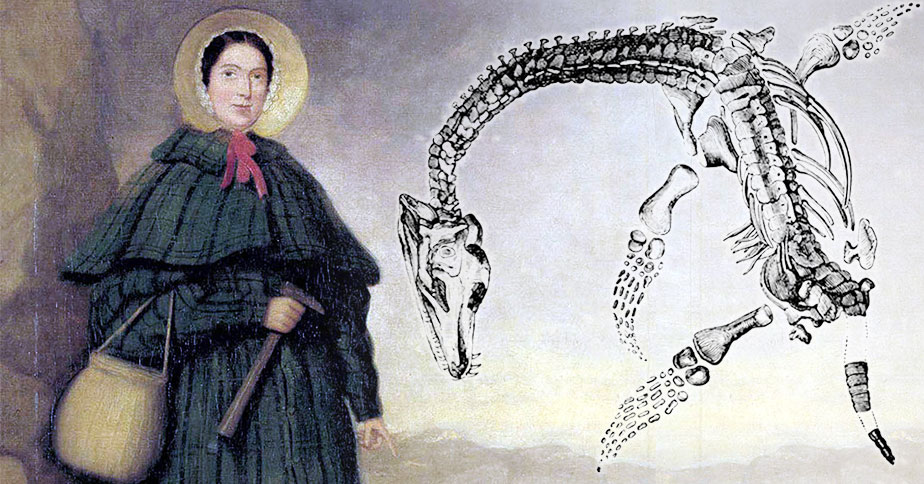
Mary Anning as a young woman - the fossil hunter who changed science
Every winter, the sea bit into the cliffsA steep rock face, especially by the sea, breaking pieces away and revealing strange shapes hidden inside — spirals, bones, and shells turned to stone.
One morning in the early 1800s, a 12-year-old girl named Mary Anning walked along the beach with her dog, Tray. She carried a small hammer and a wicker basket.
"Come on, Tray," she said. "Let's see what the tide has brought us today."
Mary loved searching for fossilsThe remains or imprint of a plant or animal turned to stone over time — the remains of ancient life turned to rock. Most people thought they were just "curiosities." But to Mary, they were clues to a long-forgotten world.
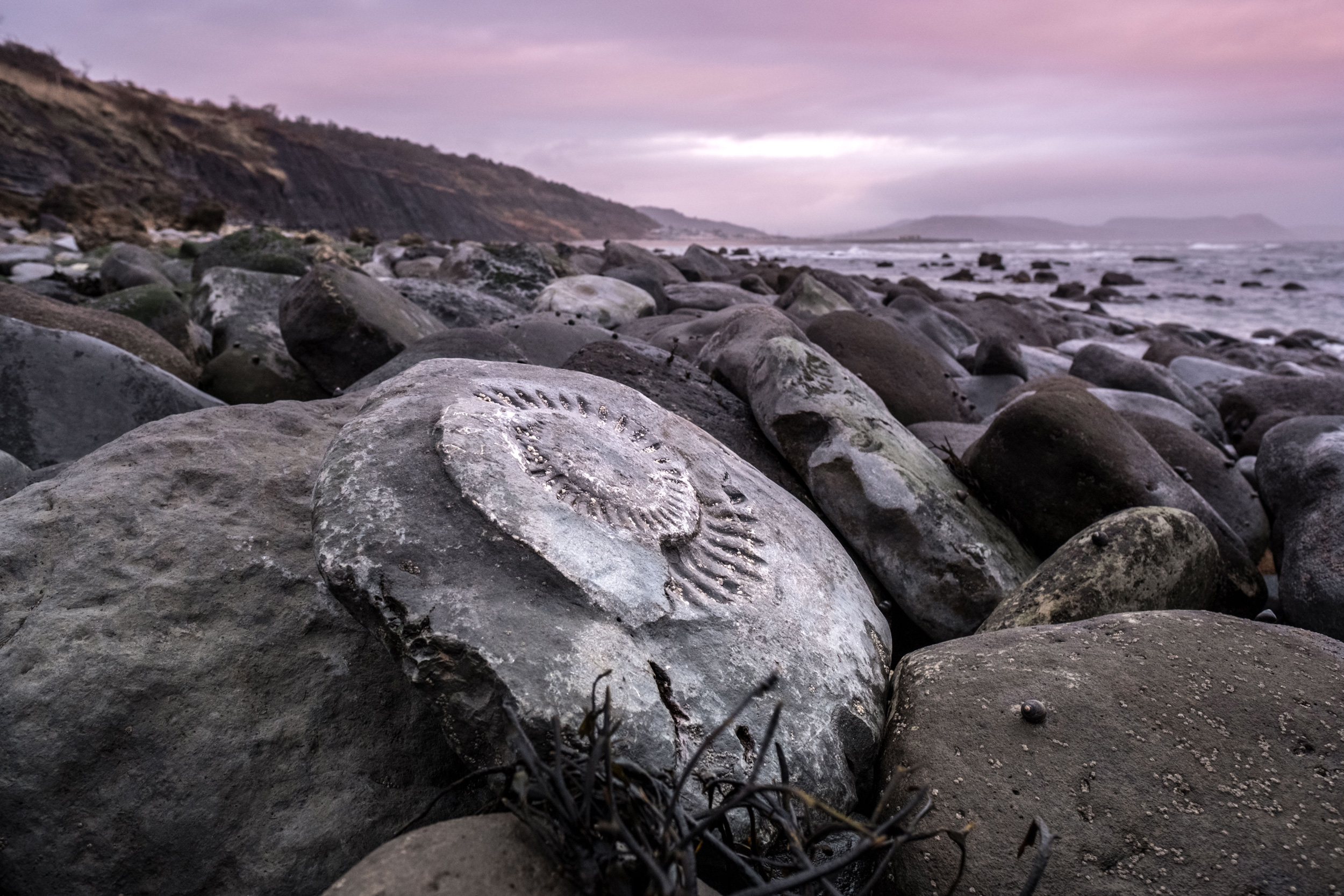
The Jurassic Coast cliffs at Lyme Regis, where Mary searched for fossils after every storm
The Strange Skull
That morning, after a storm, Mary noticed something unusual sticking out of a cliff face — a round shape with sharp, stony teeth.
She chipped away carefully with her hammer. The shape grew bigger, and her eyes widened.
It wasn't a shell or a fish. It looked like a skull.
She called for her brother Joseph. Together, they dug for days, using sticks and brushes, uncovering a long neck and a strange body — like a giant lizard, but with flippers!
"It's a sea monster!" Joseph whispered.
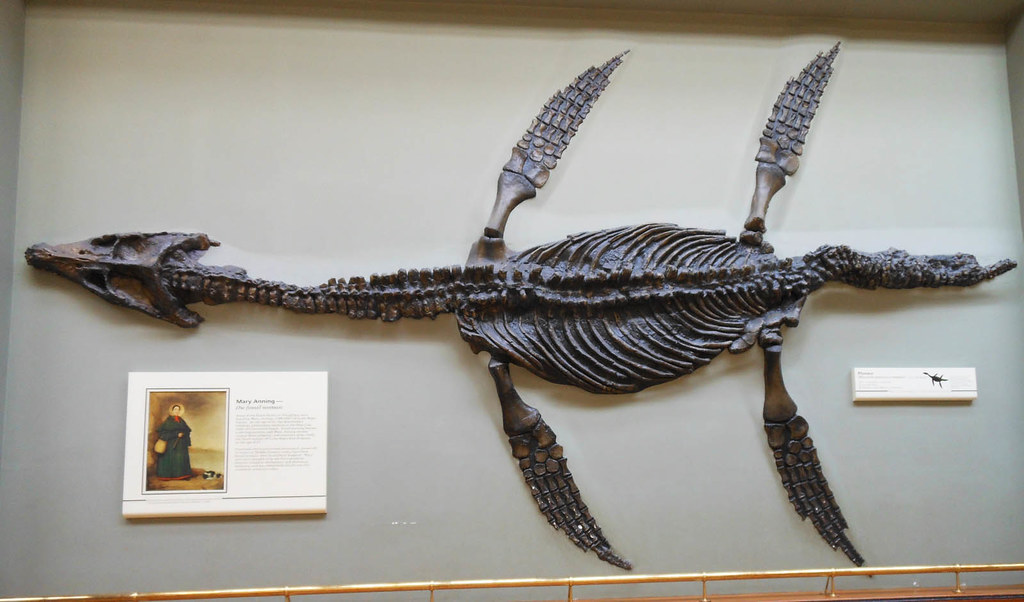
A Pliosaur fossil discovered by Mary Anning - now displayed at the Natural History Museum in London
Word spread quickly. Scientists from London came to see it. They realized it wasn't a monster at all — it was something the world had never seen before.
They named it IchthyosaurusA large sea reptile from prehistoric times that looked like a fish with flippers, meaning "fish lizard."
And Mary, the little girl from Lyme Regis, had discovered one of the first prehistoricThe time before people began to write down history reptiles ever found.
🦴 What Made It Special:
Before Mary's discovery, most people didn't know that creatures could go extinctWhen a type of animal or plant completely disappears from the Earth. They thought all animals that ever lived were still alive somewhere. Mary's fossils proved that ancient life was very different from today.
The Fossil Hunter
Mary didn't stop there. As she grew older, she spent nearly every day exploring the cliffs, searching after storms when new fossilsThe remains or imprint of a plant or animal turned to stone over time were exposed.
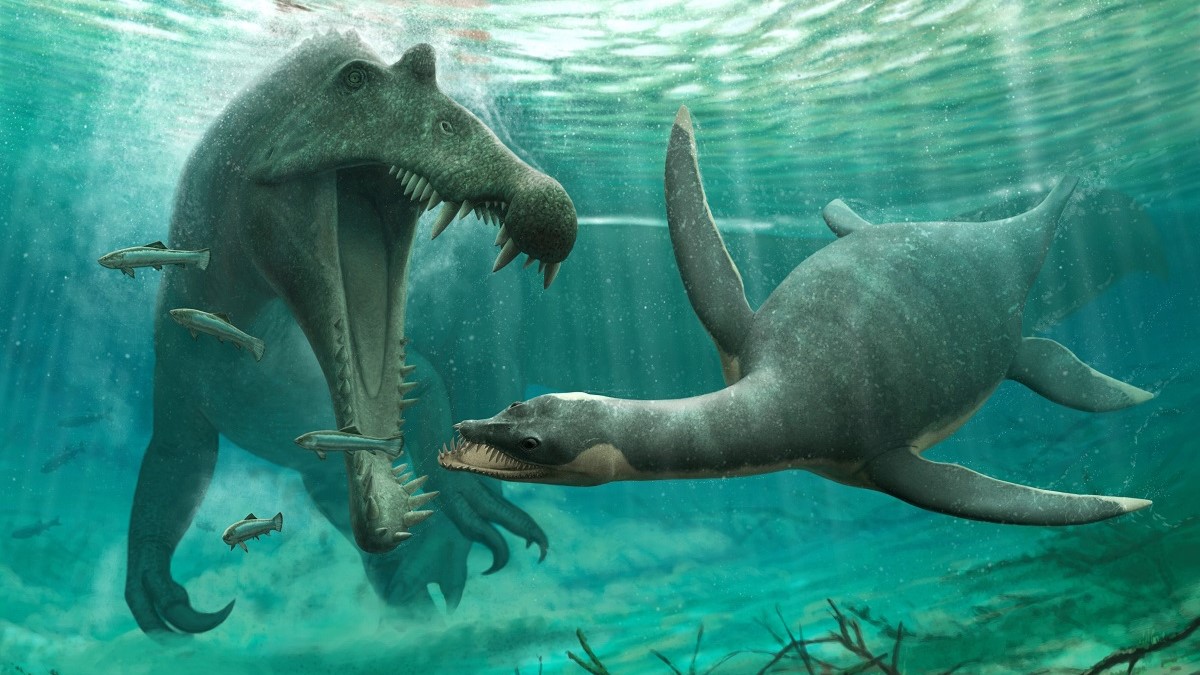
A Plesiosaur fossil - one of Mary's most famous discoveries with its distinctive long neck
She found PlesiosaursA prehistoric reptile with a long neck that lived in the ocean with long necks, Pterosaurs that once flew through the skies, and countless ammonitesA fossil of a spiral-shelled sea animal that lived millions of years ago and belemnitesA fossil shaped like a bullet, from a squid-like creature — spiral and bullet-shaped fossils that tourists loved to buy.
She opened a small shop called "Anning's Fossil Depot" where she sold her discoveries to visitors and scientists alike.
Even though she never had formal schooling, she became one of the world's most skilled paleontologistsA scientist who studies fossils to learn about ancient life — a scientist who studies ancient life.
💡 Mary's Philosophy:
"The cliffs are my books," she told a visitor. "And the stones are the pages."
Her curiosityA strong desire to learn or know something — her desire to understand the world — made her one of history's greatest fossil hunters.
Changing the World's Story
At that time, people thought the Earth was only a few thousand years old. But Mary's fossilsThe remains or imprint of a plant or animal turned to stone over time told a different story — one of oceans that had dried up, creatures that had vanished, and ages that stretched back millions of years.
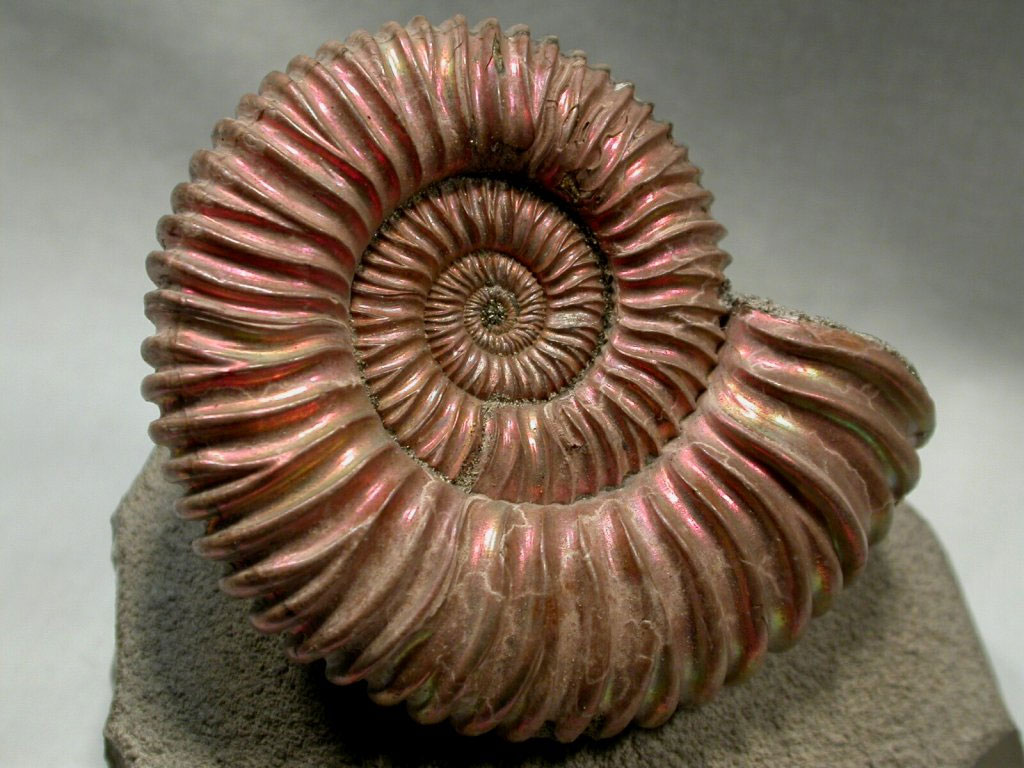
An ammonite fossil - Mary sold these beautiful spiral shells to tourists and collectors
Her discoveries helped scientists understand extinctionWhen a type of animal or plant completely disappears from the Earth and the history of life itself.
Even though some people didn't believe a young woman could make such discoveries, Mary kept digging. She wanted to uncover the truth, not fame.
🌍 Facing Challenges:
In the 1800s, most scientists were wealthy men. Mary was a poor girl with no formal education. Many scientists took credit for her discoveries without even mentioning her name. But she continued her work because she loved uncovering Earth's secrets.
"I am content," she said, "to have opened a window into another world."
The Legacy in Stone
Today, fossilsThe remains or imprint of a plant or animal turned to stone over time from Lyme Regis can be found in museums all over the world. And Mary Anning's name is written beside them — the girl who found giants in stone.

A statue of Mary Anning with her dog Tray stands in Lyme Regis today, honoring her contributions to science
When modern scientists dig up dinosaur bones or study ancient seas, they still follow in her footsteps.
Every fossilThe remains or imprint of a plant or animal turned to stone over time they find whispers a secret from Earth's past — a story Mary helped the world learn to read.
✨ Mary's Lasting Words:
"We are all fossil hunters," she once said. "We just need to look closely enough."
Today, paleontologistsA scientist who studies fossils to learn about ancient life around the world credit Mary Anning as one of the most important fossil hunters in history. She proved that curiosityA strong desire to learn or know something and persistence matter more than wealth or formal education.
🧠 Science Vocabulary
Fossil
The remains or imprint of a plant or animal turned to stone over time.
Paleontologist
A scientist who studies fossils to learn about ancient life.
Extinction
When a type of animal or plant completely disappears from the Earth.
Ichthyosaurus
A large sea reptile from prehistoric times that looked like a fish with flippers.
Plesiosaur
A prehistoric reptile with a long neck that lived in the ocean.
Ammonite
A fossil of a spiral-shelled sea animal that lived millions of years ago.
Belemnite
A fossil shaped like a bullet, from a squid-like creature.
Curiosity
A strong desire to learn or know something.
Prehistoric
The time before people began to write down history.
Cliff
A steep rock face, especially by the sea.
🔬 Try It Yourself: Make a Fossil!
Fossil Imprint Activity
Create your own "fossil" just like the ones Mary discovered!
Materials Needed:
- Air-dry clay or play dough
- Seashell, leaf, toy dinosaur, or other object
- Brown or gray paint (optional)
- Small paintbrush
Instructions:
- Flatten a piece of clay into a pancake shape about 1 inch thick
- Press your object firmly into the clay to make a clear imprint
- Carefully remove the object, leaving the impression behind
- Let the clay dry completely (this may take 24 hours)
- Once dry, paint it to look like stone (optional)
🤔 Think About It:
- • What might scientists in the future learn from your fossil?
- • How is your imprint similar to real fossils?
- • What information about the object can you see in the imprint?
- • What information is missing?
💬 Discussion Questions
1. How did Mary's curiosity lead to her discovery?
Think about: What made her keep searching the cliffs? How did her observations lead to scientific breakthroughs?
2. Why was her work important for science and history?
Consider: What did people believe before her discoveries? How did fossils change our understanding of Earth's age and extinction?
3. What challenges did she face as a young woman scientist?
Reflect: How did her gender and lack of formal education affect how people treated her? Why did she continue despite these obstacles?
4. What do fossils teach us about how Earth has changed?
Explore: What can we learn from finding sea creature fossils on land? How do fossils show us that life on Earth is always changing?