🧠 Journey Through the Excretory System
How the Body Cleans Itself
An adventure inside the human body's amazing cleanup system
A curious student shrinks down to microscopic size and travels through the body to see how waste is removed. Every system in the body works together to keep us balanced and healthy — especially the one that takes out the "trash."
🔬 The Mission Inside
"Today," said Dr. Rivera, "you're going to see what your body does every second to stay clean."
Jaden blinked. "You mean like taking a shower?"
Dr. Rivera smiled. "Not exactly. The shower on the inside."
Before he could ask what that meant, the world around him shimmered. In an instant, Jaden was smaller than a grain of sand — floating through a glowing red river of blood.
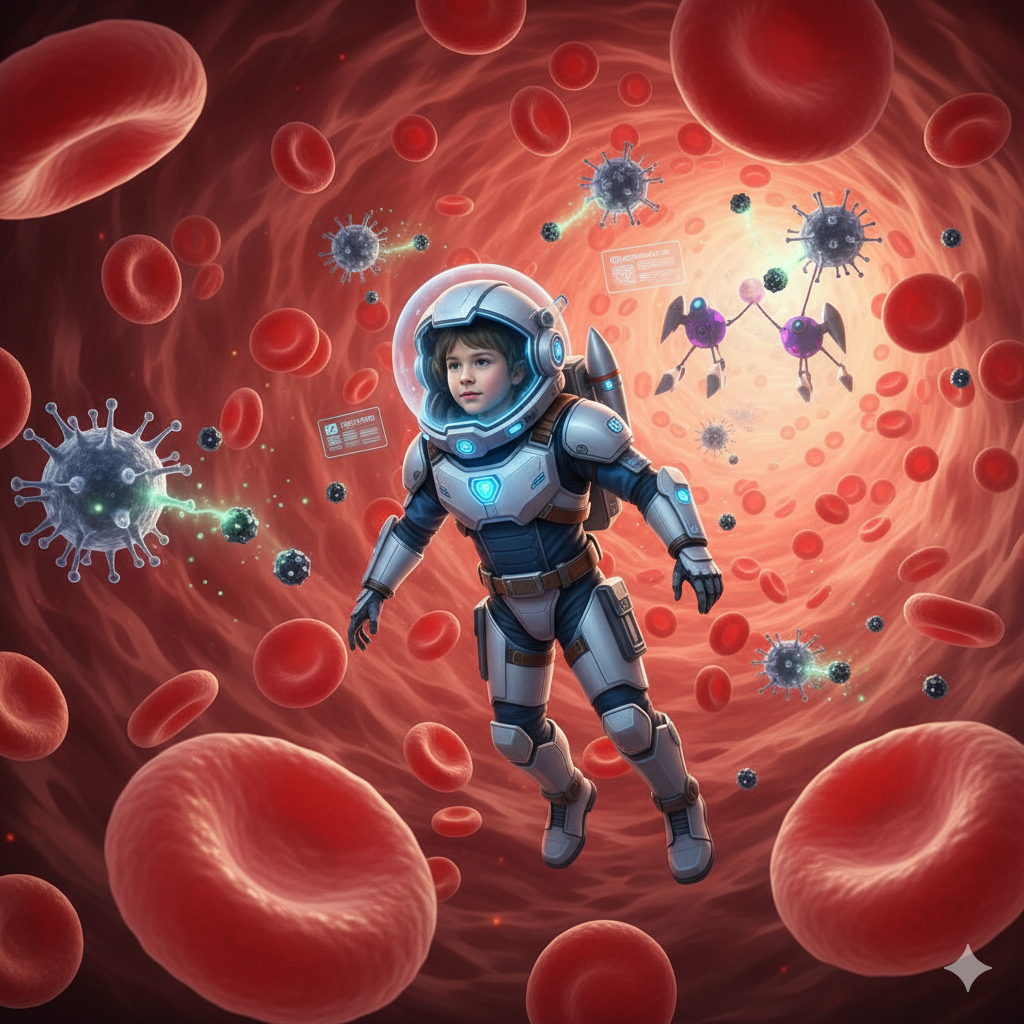
A child wearing a science suit floating among red blood cells
🏙️ The City of Cells
"All these red shapes," said Dr. Rivera, "carry oxygen to every part of your body. But they also carry trash — the things your body doesn't need."
Jaden looked around. Tiny workers (white blood cells) floated by, cleaning up germs. Others zipped along carrying carbon dioxide to the lungs, where it would soon be breathed out.
"This," said Dr. Rivera, "is the beginning of the excretory system — the team that removes waste and keeps your body balanced."
🫘 The Gate of the Kidneys
A rushing sound filled Jaden's ears. Ahead were two enormous bean-shaped organs glowing blue — the kidneys.
"Here's where the real filtering happens," Dr. Rivera said. "The kidneys are like water-cleaning machines. They take out wastes from the blood and send useful materials back in."
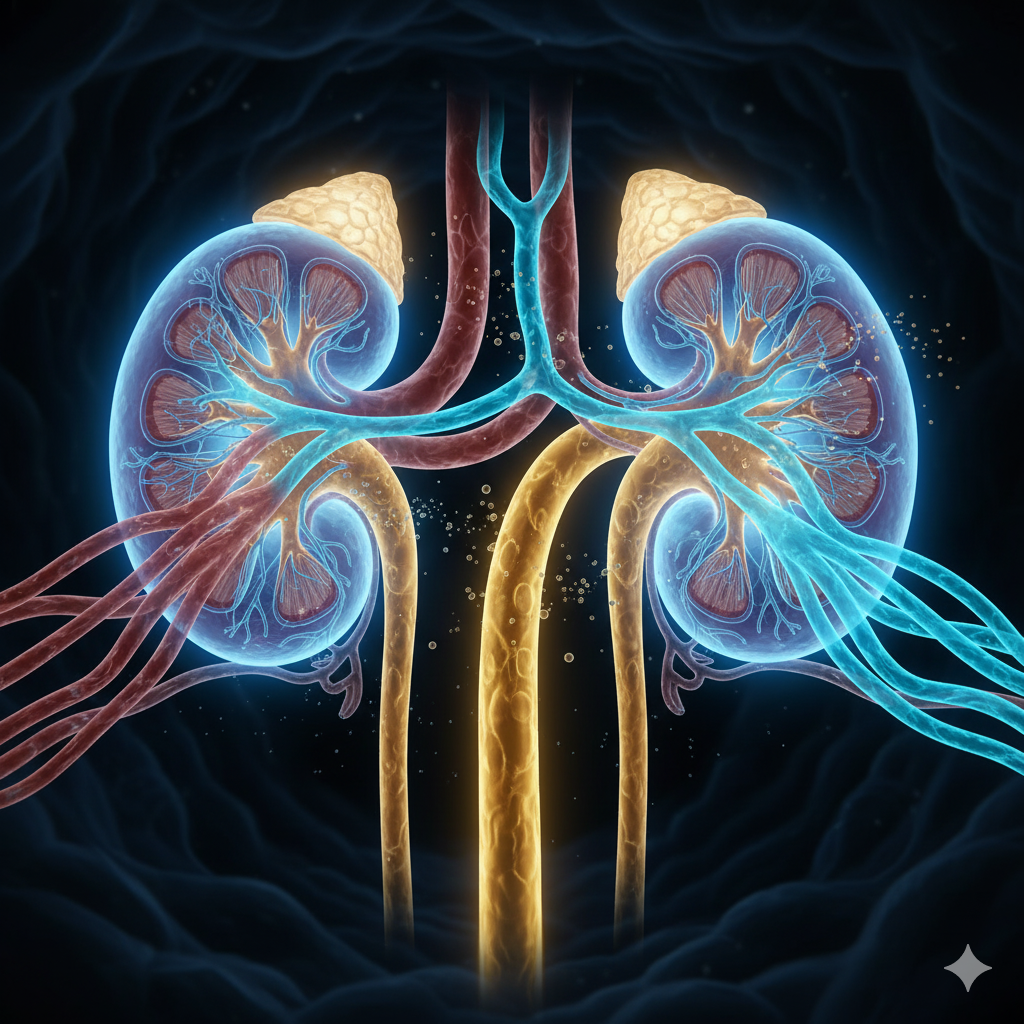
Glowing bean-shaped organs showing clean and waste-filled tubes
Jaden peered closer and saw millions of twisting tubes. "These are nephrons," Dr. Rivera explained. "Each one filters blood drop by drop."
He watched as urea and other wastes got trapped while clean water and nutrients flowed back into the bloodstream.
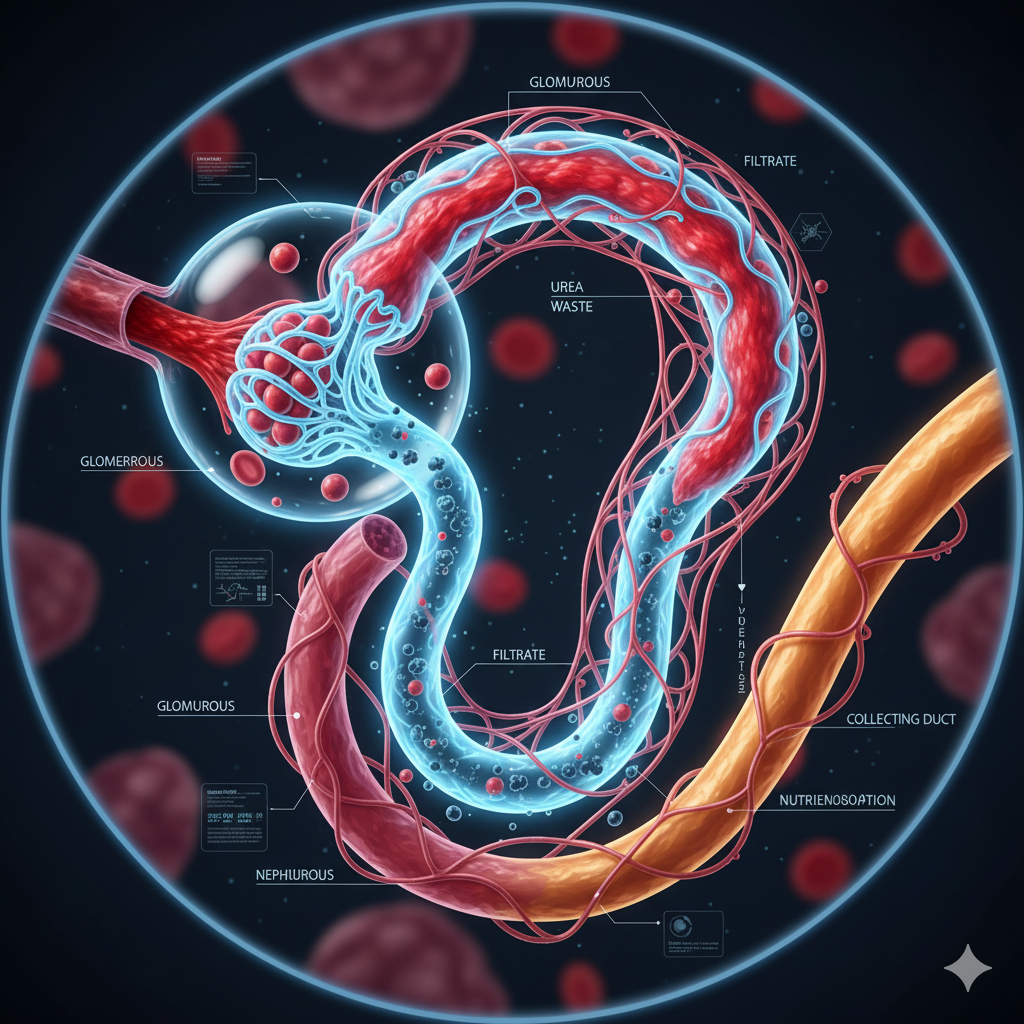
Magnified loop filtering particles, showing urea separated from blood
💧 The Bladder Balloon
The wastes collected into a golden tube called the ureter, which led down to a balloon-like bag — the bladder.
"This is your storage tank," said Dr. Rivera. "It holds urine until your body is ready to release it."
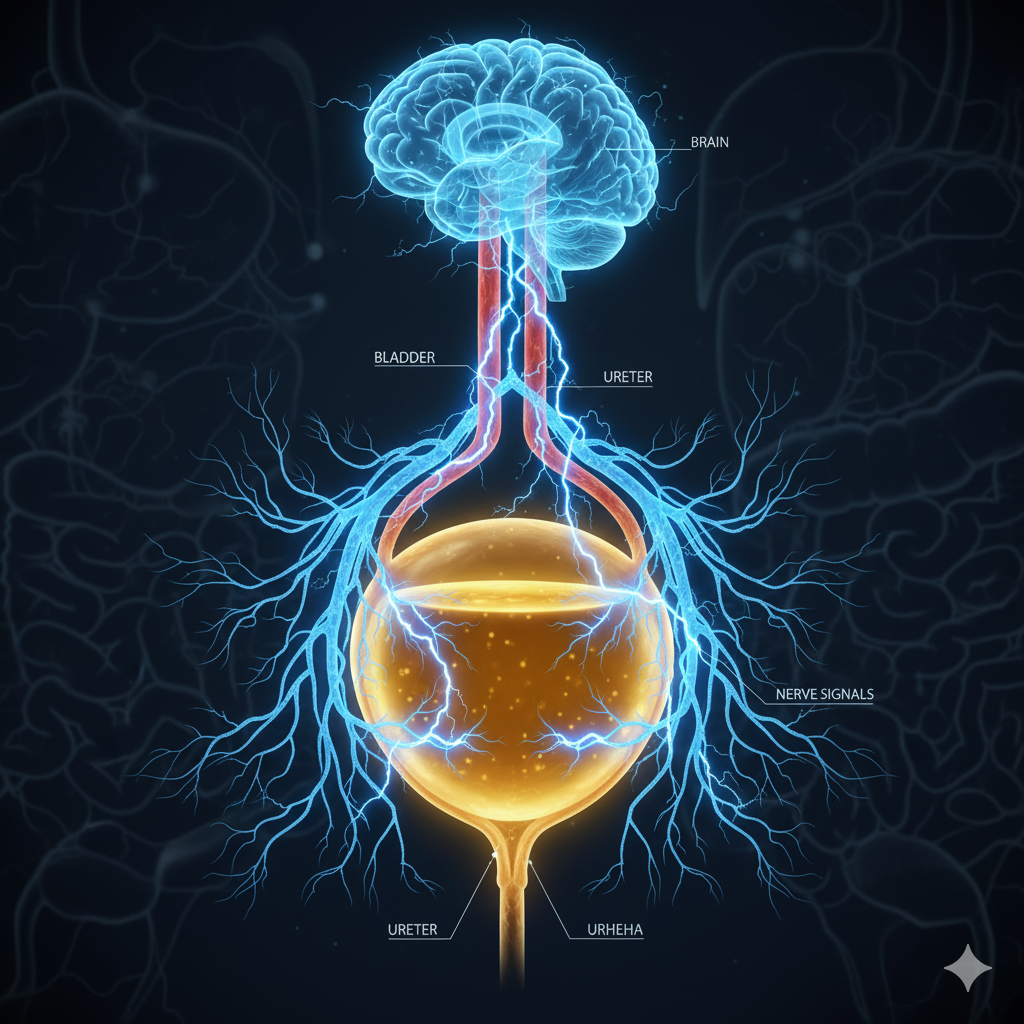
Light signals traveling from bladder to brain
Jaden noticed signals sparking like lightning between the bladder and the brain. "That's your body's alert system," Dr. Rivera said. "When the bladder's full, your brain gets the message: It's time to go!"
💨 Sweat and Breath — The Hidden Exits
They shot upward, zipping through the bloodstream until they reached the skin. "Your sweat glands help too," said Dr. Rivera. "They push extra salt and water out through pores in your skin."
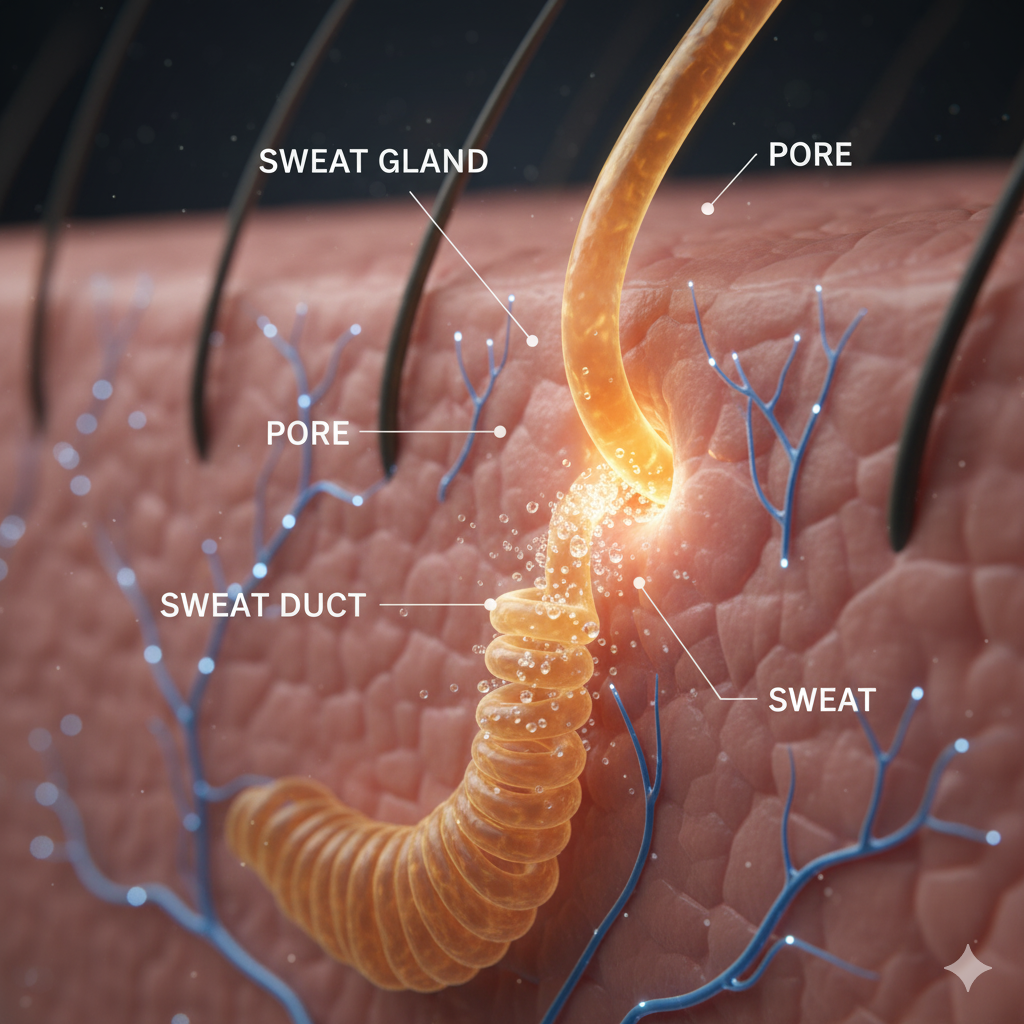
A close-up of skin pores releasing droplets
Jaden could see droplets forming — each one a mix of water and tiny amounts of waste.
Then they visited the lungs, where carbon dioxide rushed out with every breath.
"See?" said Dr. Rivera. "Your body has many doors for waste — through urine, sweat, and breath. The excretory system keeps everything in balance."
✨ The Clean Return
Jaden floated back into the bloodstream, watching it sparkle with fresh oxygen.
"So every second, my body's cleaning itself," he said.
"Exactly," said Dr. Rivera. "Your excretory system is the world's most efficient janitor — one that never takes a break."
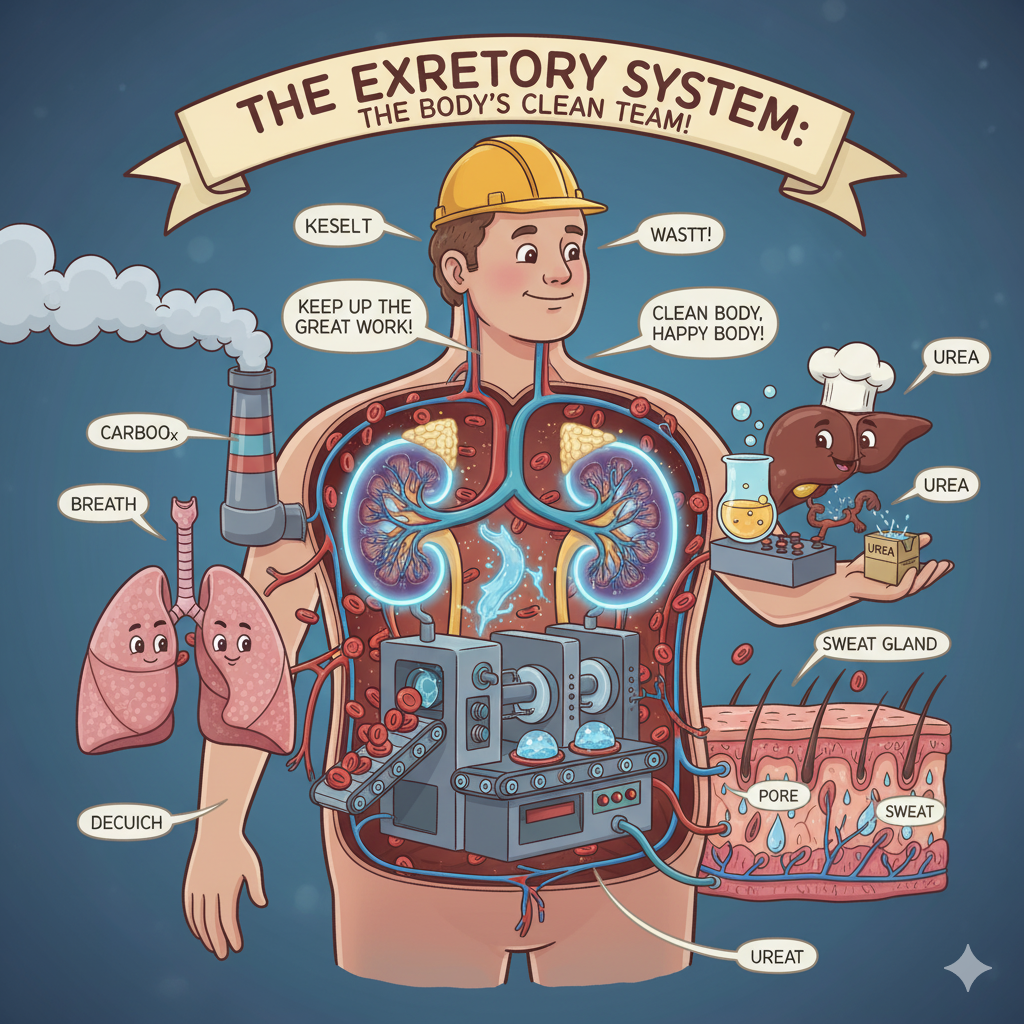
Cartoon-style illustration of organs (lungs, kidneys, liver, skin) working together like factory workers
As Jaden returned to normal size, he felt grateful for something he had never thought about before: the quiet, constant teamwork keeping him alive.
"The excretory system: The world's most efficient janitor — one that never takes a break."
💬 Discussion Questions
1. What are the main organs of the excretory system?
2. How do the kidneys filter the blood?
3. What other systems help remove waste from the body?
4. Why is balance (homeostasis) important for health?
5. How is the excretory system like a recycling center?
🔬 Mini Activity: Build a Kidney Filter
Goal: Understand how the kidneys separate useful materials from waste.
What You Need:
- A coffee filter or paper towel
- A clear cup
- Water mixed with coffee grounds or sand
Steps:
- Pour the mixture into the filter over the cup.
- Watch clean water drip through — leaving the "waste" behind.
- Talk about how this is like the kidney filtering blood.
Lesson: Filtration is how your kidneys keep your blood clean and your body healthy.
Part of the Science Reading Collection
🧠 Human Body Systems • Week 14
Questions? Contact us:
📧 contact@krlt.com