Buzz — The Bee Who Changed the Farm
A Discovery Tale about Pollination, Teamwork, and the Power of Small Creatures
Discover how one small bee and a caring farmer brought life back to Willow Creek Farm through the amazing process of pollination.
The Lonely Flower Field
On a warm spring morning, a honeybee named Buzz flew over the Willow Creek Farm. From above, he saw rows of apple trees, patches of clover, and fields of colorful flowers.
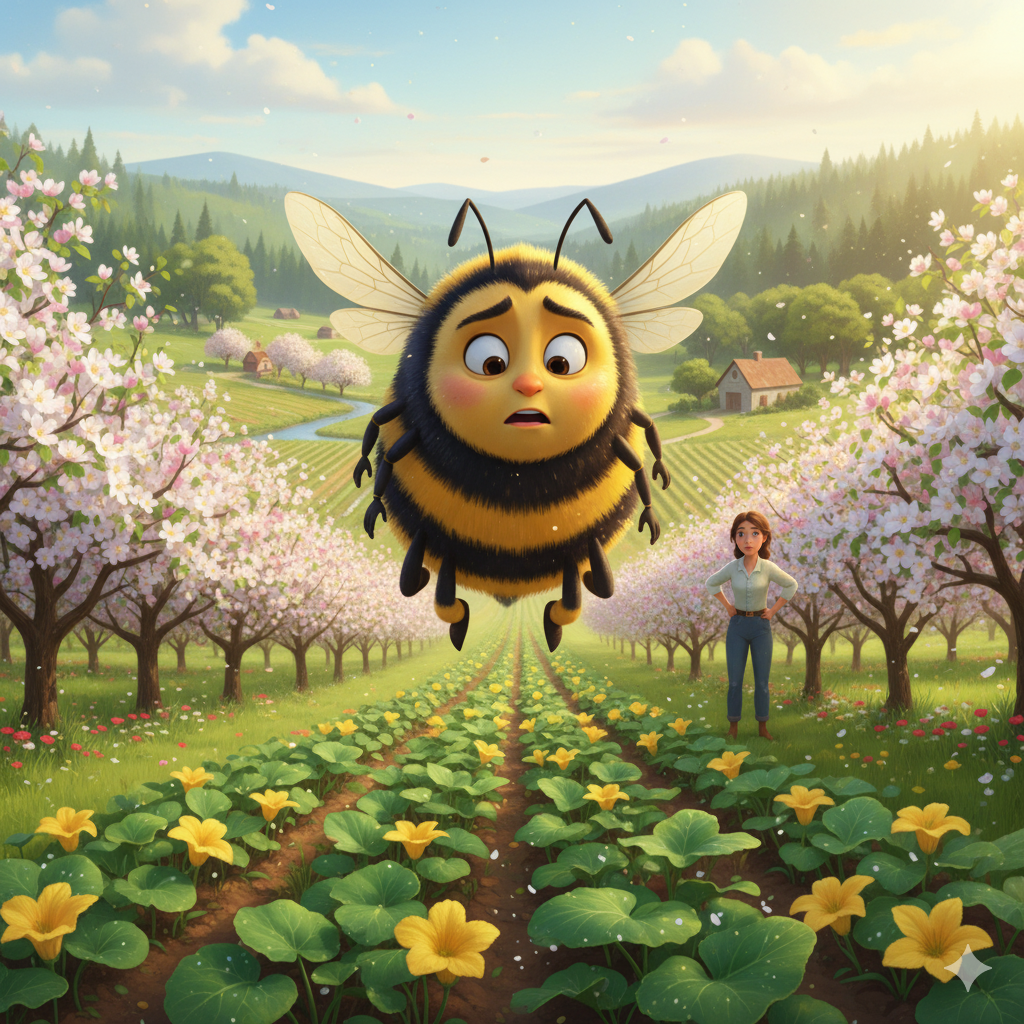
Buzz surveying Willow Creek Farm on a spring morning
But something was wrong. Many of the flowers were open and waiting — yet no bees were visiting.
Buzz hovered in confusion. "Where is everyone?" he buzzed aloud.
The air was too quiet. A few butterflies drifted by, but there was no familiar hum of bee wings. No buzzing chorus from his friends and cousins. Just silence.
Buzz didn't know it yet, but the farm's owner, Farmer Lila, was worried too. She stood in her orchard that morning, looking at the apple trees with concern.
"The blossoms are beautiful this year," she said to herself. "But where are all the bees?"
Her apple trees hadn't been producing much fruit lately, and her vegetable garden looked thin and struggling. The pumpkin vines had plenty of flowers, but no pumpkins were growing. The cucumber plants looked healthy, but bore little fruit.
🌸 A Quiet Problem:
Without bees, the plants were struggling to grow. Something had changed at Willow Creek Farm, and both Buzz and Farmer Lila could feel it. The balanceWhen nature's parts work together so everything stays healthy of the farm's ecosystemA community of living things that depend on each other had been disrupted.
The Problem with Pollen
That afternoon, Buzz landed on a lonely apple blossom and sipped its sweet nectarSweet liquid in flowers that attracts bees and other insects. As he moved around inside the flower, tiny grains of yellow pollenTiny yellow grains made by flowers that bees carry to help plants grow stuck to his fuzzy legs and body.
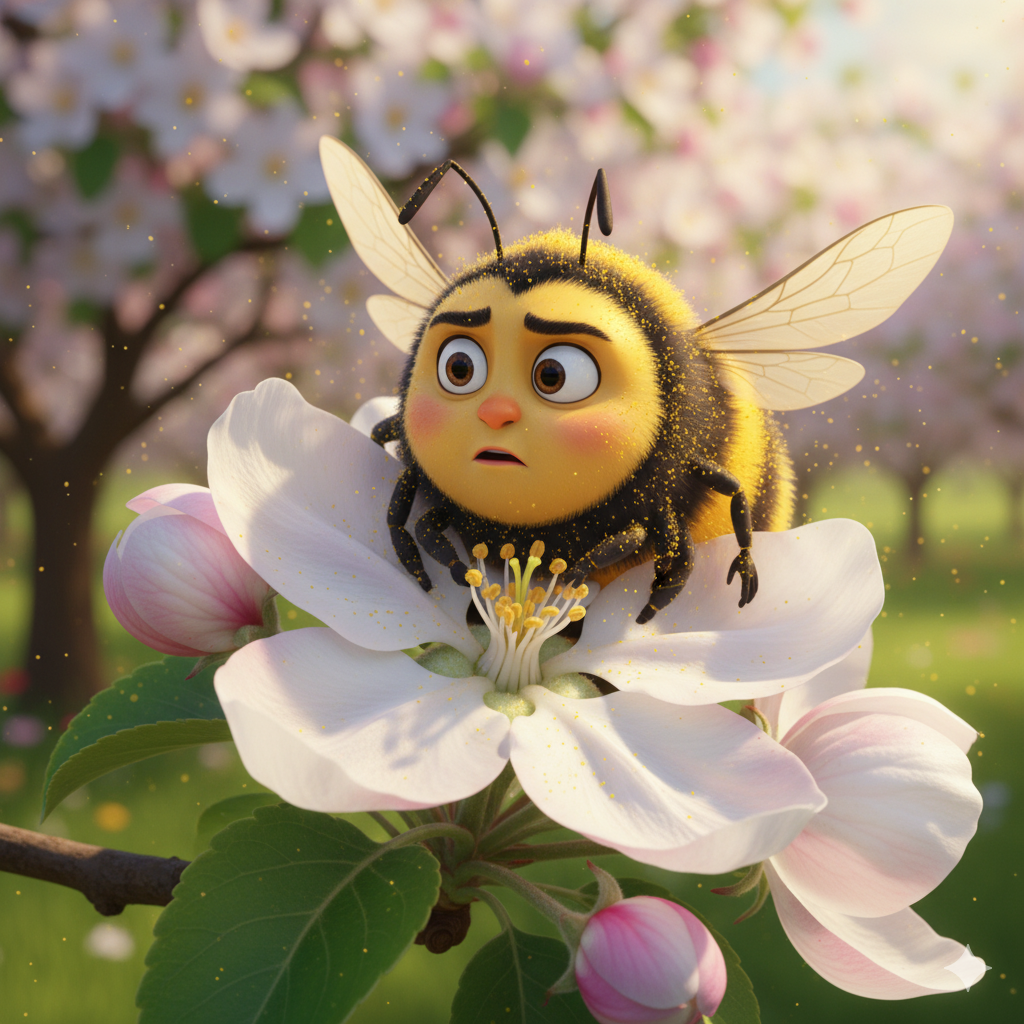
A lonely blossom waiting for a pollinator to visit
As he flew to the next flower, some of the pollen rubbed off onto that blossom's center. Buzz didn't realize it, but he had just performed one of nature's most important jobs — pollinationThe process of moving pollen from one flower to another so plants can make seeds or fruit.
Later that day, Dr. Rivera, the local biologistA scientist who studies living things, came to visit Farmer Lila. He had heard about her struggling crops and wanted to help.
"When bees move pollen from one flower to another, they help the plants make fruit and seeds," Dr. Rivera explained, showing Lila a diagram. "It's called pollination. About one-third of the food we eat depends on pollinators like bees."
Lila nodded slowly, understanding dawning on her face. "No wonder my trees look so tired — there aren't enough bees to help them! But why did they leave?"
🔬 Why Bees Disappeared:
Dr. Rivera explained several reasons: The farm had been using pesticidesA chemical that kills insects but can also harm helpful ones like bees to control pests, but these chemicals also harmed the bees. There weren't many wildflowers left for bees to gather nectar from. And neighboring farms had cleared away all the places where wild bees could nest.
"Bees need three things to thrive," he said. "Food in the form of flowers, safe places to nest, and an environment free from harmful chemicals."
Buzz didn't understand human words, but he could feel it — the farm needed help. And somehow, he sensed that help was coming.
The Plan for the Bees
Farmer Lila decided to take action. With Dr. Rivera's guidance, she created a plan to bring the bees back to Willow Creek Farm.
First, she planted wildflowers everywhere — bright blue lupines, orange California poppies, purple coneflowers, and tall yellow sunflowers. She let a corner of her field go wild with clover and let dandelions bloom in the grass.
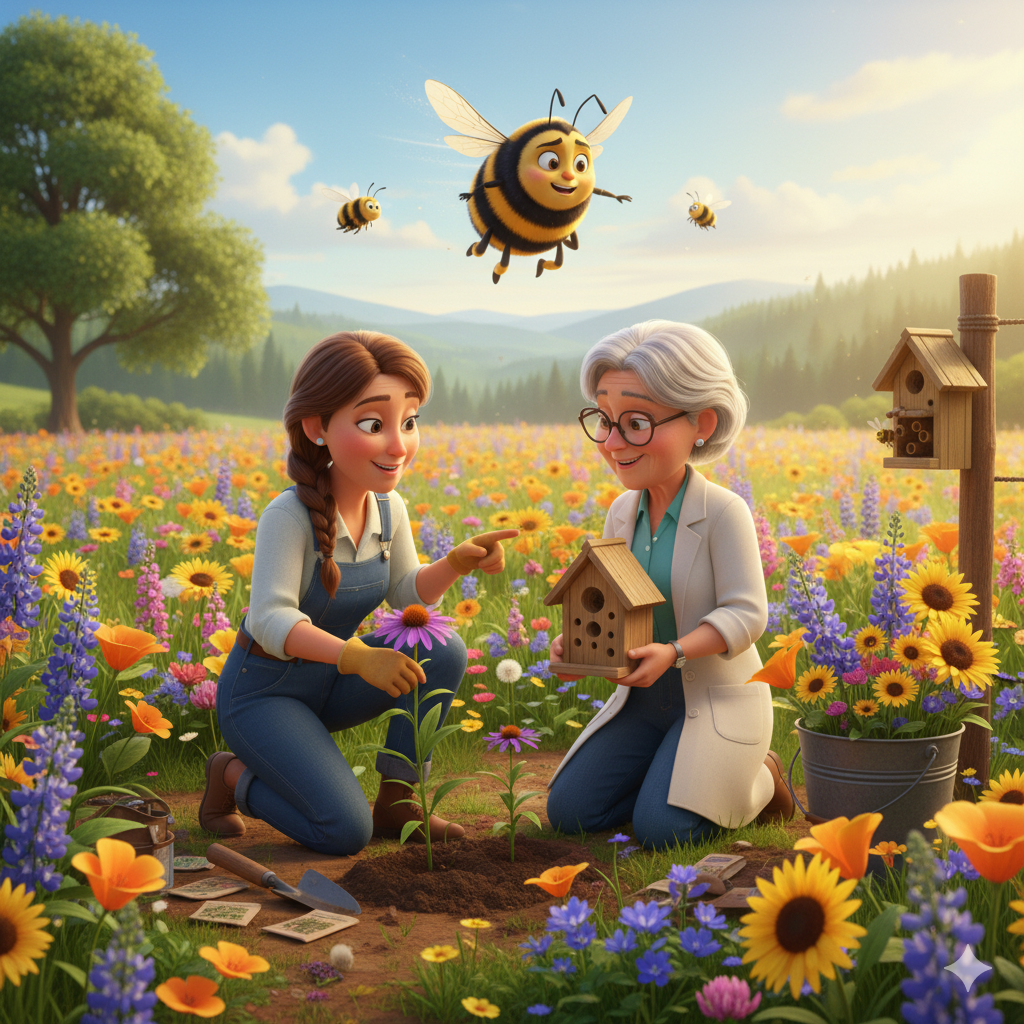
Farmer Lila and Dr. Rivera planting wildflowers to welcome bees back
Next, she built small bee houses from wood and hollow bamboo tubes for solitary beesA bee that lives alone instead of in a hive — bees that don't live in hives like Buzz, but nest alone in small holes. She drilled different-sized holes in blocks of wood and hung them near the orchard.
Most importantly, she promised to stop using harmful pesticides. Instead, she would use natural methods to control pests — like encouraging ladybugs and birds that eat harmful insects.
"I thought I was helping my plants by spraying chemicals," Lila said. "But I was actually hurting the very creatures that make my garden grow."
It didn't take long for Buzz to notice the changes. Within days, the air smelled sweeter with new flowers blooming. Within weeks, other bees began to arrive.
First came other honeybees from a wild hiveThe home where bees live and make honey in a nearby oak tree. Then came fuzzy bumblebees, bouncing from flower to flower. Tiny mason bees appeared, carrying mud to build their nests in the bee houses. Even some butterflies and hummingbirds joined in.
The air buzzed again with life.
"Welcome back, friends!" Buzz cheered, doing a loop in the air. "There's plenty to do!"
🌻 Creating a Bee-Friendly Space:
- • Plant native flowers that bloom at different times of year
- • Provide water in shallow dishes with pebbles for bees to land on
- • Leave some bare ground for ground-nesting bees
- • Build or buy bee houses for solitary bees
- • Avoid pesticides and use natural pest control instead
- • Let some areas of your yard grow wild with native plants
The Farm Comes Alive
As the weeks passed, the farm transformed before everyone's eyes.
The apple trees grew heavy with fruit, their branches bending under the weight of red and green apples. Clover fields shimmered with dozens of bees at a time. The vegetable garden overflowed with tomatoes, cucumbers, and squash.
Buzz worked tirelessly, visiting hundreds of flowers every day. He carried pollen from bloom to bloom, helping each plant grow strong. On good days, he could visit over 2,000 flowers!
🐝 Incredible Bee Facts:
- • A single bee can visit 50-100 flowers on one trip
- • Honeybees visit up to 2,000 flowers per day
- • It takes about 2 million flower visits to make one pound of honey
- • Bees can see ultraviolet patterns on flowers that we can't see
- • A bee's wings beat 200 times per second — that's what makes the buzzing sound!
The farmer smiled as she watched the busy bees at work. "All it took was giving nature a little help," she said, picking a perfect red apple from a tree that had been bare the year before.
Dr. Rivera brought his students to see the transformation. They sat in the orchard with notebooks, watching bees up close and counting how many flowers each one visited in a minute.
"Notice how the bee's body is covered in fuzzy hairs?" Dr. Rivera pointed out. "Those hairs trap pollen and carry it from flower to flower. Without those fuzzy bodies, pollination would be much harder!"
The students watched in wonder as Buzz crawled into an apple blossom, his legs turning yellow with pollen.
"One small bee," Dr. Rivera told them, "can help feed an entire community. In fact, bees and other pollinators are responsible for pollinating crops that produce about $15 billion worth of food in the United States every year!"
One student raised her hand. "Can we make bee houses at our school?"
Dr. Rivera smiled. "That's a wonderful idea. Every little bit helps."
The Lesson of the Hive
At sunset, Buzz returned to his hiveThe home where bees live and make honey, tired but proud. The hive was buzzing with activity as thousands of bees returned from their day of work.
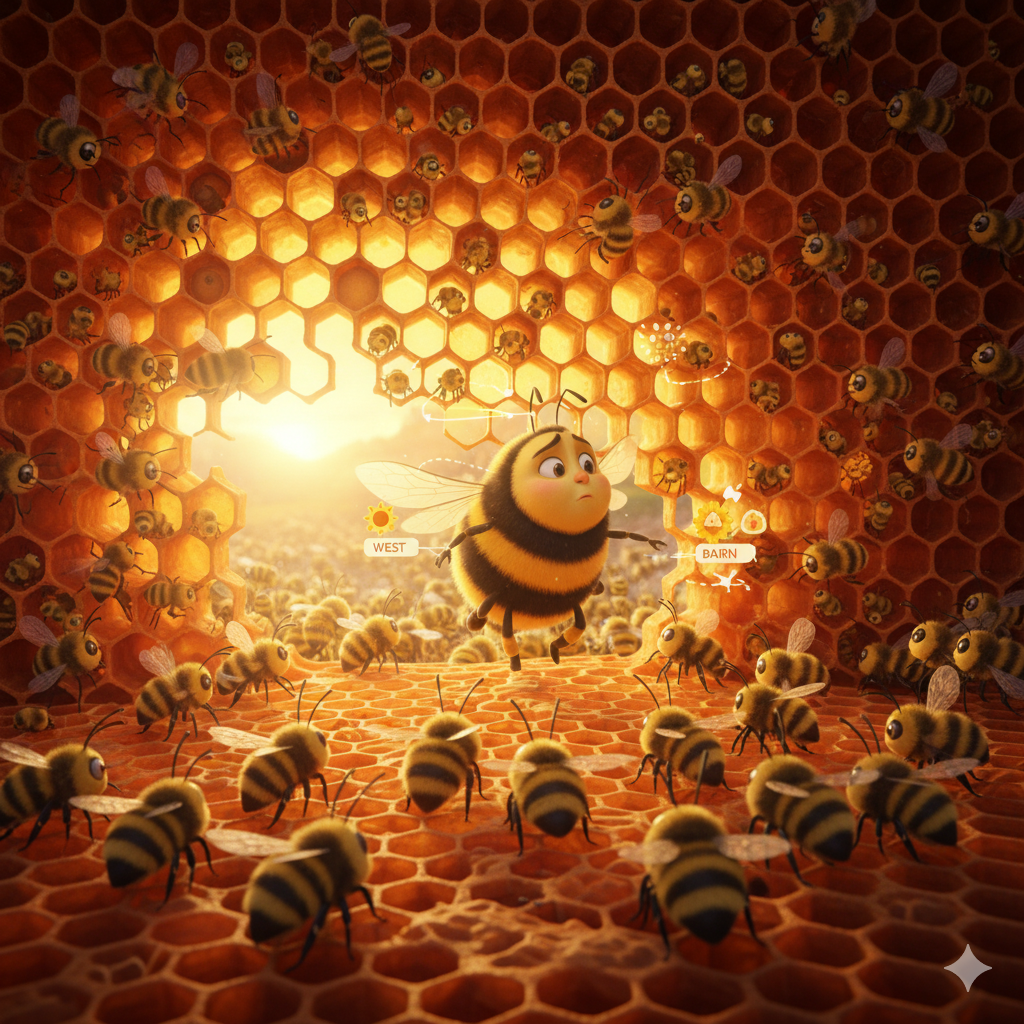
The hive at sunset — a busy community working together
Inside the hive, Buzz performed the waggle danceThe special movement bees use to show others where food is — a special figure-eight move that told his fellow bees exactly where the best flowers were and how far away they were located.
"There's a patch of sunflowers to the west!" he communicated through his dance. "And the clover field by the barn is full of nectar!"
💃 The Amazing Waggle Dance:
The waggle dance is one of the most sophisticated forms of communication in the animal kingdom. When a bee finds good flowers, she returns to the hive and dances in a figure-eight pattern.
The direction she moves tells other bees which way to fly (in relation to the sun). The length of her waggle tells them how far away the flowers are. And how vigorously she dances tells them how good the nectar source is!
It's like giving GPS directions through dance!
Inside the hive, his friends cheered in their bee language and prepared to take flight the next morning, ready to follow Buzz's directions.
Outside, the farm glowed golden in the evening light. Apples hung heavy from branches. Pumpkins swelled on their vines. Tomatoes ripened red and round. And bees hummed in the distance — a gentle symphony of life and balance restored.
Farmer Lila stood in her garden, looking at the abundance around her. Just months ago, this same garden had looked sad and empty.
"Even the smallest creature," she said softly, watching a bee visit the last flowers of the day, "can make the biggest difference."
And Buzz, the little bee who never gave up, had changed the farm forever.
🌍 The Bigger Picture:
Willow Creek Farm was just one small farm, but when many people help bees, it makes a huge difference. Around the world, bee populations have been declining due to habitat loss, pesticides, and climate change. But when we create bee-friendly spaces — even small ones like a garden or a few pots of flowers on a balcony — we help ensure that these amazing pollinators can continue their vital work of feeding the world.
🧠 Science Vocabulary
Pollination
The process of moving pollen from one flower to another so plants can make seeds or fruit.
Pollen
Tiny yellow grains made by flowers that bees carry to help plants grow.
Nectar
Sweet liquid in flowers that attracts bees and other insects.
Pesticide
A chemical that kills insects but can also harm helpful ones like bees.
Ecosystem
A community of living things that depend on each other.
Biologist
A scientist who studies living things.
Waggle Dance
The special movement bees use to show others where food is.
Solitary Bee
A bee that lives alone instead of in a hive.
Hive
The home where bees live and make honey.
Balance
When nature's parts work together so everything stays healthy.
🔬 Try It Yourself: Flower Power Experiment
Test Pollination in Action
See how important pollinators are by comparing flowers that can be pollinated to those that can't!
Materials Needed:
- Two identical plants with flowers (like tomatoes, cucumbers, or squash)
- Fine mesh or cheesecloth
- String or twist ties
- Notebook for observations
- Camera (optional)
Instructions:
- Place both plants side by side in a sunny spot outside
- Cover one plant with mesh so bees and other insects can't reach the flowers (but air and light can still get through)
- Leave the other plant uncovered so pollinators can visit
- Water both plants equally and give them the same care
- Observe and record what you see each day for 2-3 weeks
- Count how many flowers turn into fruit on each plant
🤔 Think About It:
- • Which plant produced more fruit?
- • What does this tell us about the importance of pollination?
- • How many insects did you observe visiting the uncovered plant?
- • What would happen to our food supply if all pollinators disappeared?
Extension Activity: Build a Bee House
Help solitary bees by creating a simple nesting site:
- Get a block of untreated wood (4-6 inches deep)
- Drill holes of different diameters (3-10mm) about 3-5 inches deep
- Don't drill all the way through — bees need a back wall!
- Hang it in a sunny, protected spot facing southeast if possible
- Watch throughout spring and summer to see which bees move in!
💬 Discussion Questions
1. What happened when the bees disappeared from the farm?
Think about: How did the plants respond? What did Farmer Lila notice about her crops? Why is pollination so important?
2. How did Farmer Lila help bring them back?
Consider: What three things did she change on her farm? Why did each change matter? What can we learn from her actions?
3. Why are bees so important for plants and people?
Reflect: What foods do we eat that depend on pollination? What would our meals look like without bees? How do bees connect plants, farmers, and our dinner tables?
4. What can you do to help bees where you live?
Explore: What changes could you make at home or school? How can small actions make a big difference? What would you tell others about why bees matter?